
في صناعات الأدوية والنباتات، اختيار الصحيحإعدادات درجة حرارة الاستخلاص بالماء مقابل الكحولهو العامل الرئيسي في تحديد الفعالية النهائية للمستخلص. عادةً، يؤدي الغلي بالهواء الجوي التقليدي إلى تكسير المركبات الحساسة للحرارة، لكن تكنولوجيات التفريغ الحديثة قد غيّرت القاعدة الأساسية لهذه المعايير. من خلال التلاعب بالضغط الجوي، يتم...وحدة استخراج وتركيز سوائل درجة حرارة منخفضة بواسطة مكنسة بانشييسمح للمعالجات بالعمل عند نقاط غليان منخفضة بشكل كبير، مما يحمي بشكل فعال "بصمة الأصابع" للمواد الخام.
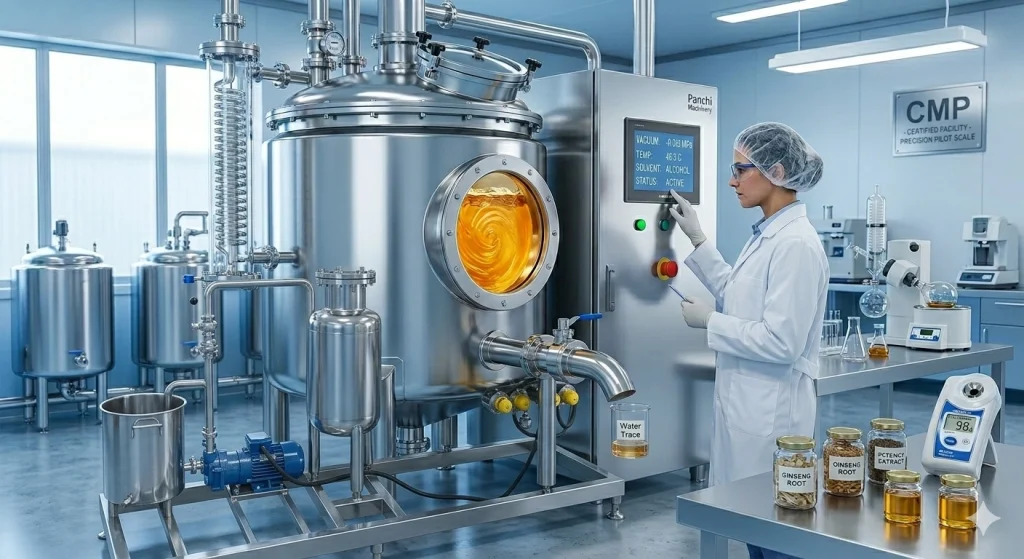
مناقشات على منصات مهنية مثلريديت r/Pharmaوالكيمياء العضوية في كوراعادةً ما تدور الأقسام حول "عتبة التحلل الحراري". بالنسبة للعديد من المركبات النباتية، فإن تجاوز درجة 60 مئوية يسبب الأكسدة وتفكك الإنزيمات. فهم المحددات المحددةإعدادات درجة حرارة الاستخلاص بالماء مقابل الكحولداخل بيئة فراغ (0.092 ميجا باسكال أو أعلى) ضروري لأي مشغل يسعى لتحقيق نتائج نقية عالية دون التضحية بالفعالية العلاجية.
وفقًا لالمواصفات الفنية لمعدات بانشييتيح النظام المتكامل 3 في 1 مجموعة واسعة من التعديلات الحرارية. يكمن الفرق الأساسي بين الماء والكحول في تقلبهما الجزيئي وكيفية استجابتهما للضغط السلبي.
تغلي الماء عند درجة حرارة 100 درجة مئوية تحت الضغط الجوي القياسي—a درجة حرارة تفسد العديد من القلويات الحساسة. ومع ذلك، في بيئة ذات فراغ عالي:
الإيثانول أكثر تقلبًا من الماء، مما يعني أنه يتطلب مراقبة حرارية أكثر دقة لمنع فقدان البخار المفرط والتدهور.
الفائدة:هذا يحفظ الزيوت الطيارة ويمنع التحلل الحراري للجليكويدات القابلة للذوبان في الكحول.
نطاق التشغيل:من 70 إلى 80 درجة مئوية خلال مرحلة الغليان الأولية.
التبخر عند درجات حرارة منخفضةيمكن استرداد الكحول وتركيزه بكفاءة فيمن 40 إلى 50 درجة مئويةتحت الفراغ.
| ميزة الإعداد | الاستخلاص القائم على الماء | الاستخلاص باستخدام الكحول |
| نقطة الغليان النموذجية (بالفراغ) | 45-60 درجة مئوية | 40-50 درجة مئوية |
| معدل استعادة المذيب | عالٍ (تكثيف البخار) | أكثر من 95٪ (المكثف العمودي) |
| الهدف من المكون النشط | البوليساكاريدات الذائبة في الماء | الزيوت الأساسية والراتنجات |
| سرعة ترويق محطة التذبذب | معتدل | مرتفع (لمساعدة التقلب) |
مكون حاسم في الإدارةإعدادات درجة حرارة الاستخلاص بالماء مقابل الكحولهي كفاءة التكثيف. تتميز وحدة بانشي بمكثف رأسي ذو مساحة سطح تبادل حراري كبيرة.
عند معالجة الكحول، يجب أن يكون النظام محكمًا تمامًا لمنع فقدان المذيب. قدرة الوحدة على تحقيق ایکمعدل استعادة المذيبات يزيد عن 95%مرتبط مباشرة بدقة غلاف التبريد. من خلال الحفاظ على تدرج حراري حاد بين البخار والمياه المبردة في المكثف، يعيد النظام بخار الإيثانول إلى الحالة السائلة فورًا، مما يجعل العملية فعالة من حيث التكلفة ومتوافقة مع البيئة.
واحدة من العوامل "المخفيّة" في إدارة الحرارة هي النقاط الساخنة المحلية. حتى لو أظهر لوحة التحكم الرقمية درجة حرارة 45 درجة مئوية، فإن العسل أو المستخلص العشبي الذي يلامس جدار السترة قد يكون أكثر سخونة بشكل كبير.
النظام مخدش PTFE (تيفلون)تم تصميم سلسلة FM لحل هذه المشكلة. من خلال مسح جدران الفولاذ المقاوم للصدأ من النوع 304/316L الداخلية باستمرار، تضمن الكاشطات أن يتحرك كامل الدفعة. هذا التحريك المستمر ضروري عند التبديل بينإعدادات درجة حرارة الاستخلاص بالماء مقابل الكحول، حيث يضمن توزيع الطاقة الحرارية بشكل منتظم، مما يمنع أي جزء من المستخلص من تجاوز حد التحلل.
الخيار منإعدادات درجة حرارة الاستخلاص بالماء مقابل الكحولليس الأمر مجرد اتباع وصفة؛ بل هو عن إتقان العلاقة بين الضغط والحرارة. باستخدام نظام مدمج مع الفراغ، لم يعد المصنعون مضطرين للاختيار بين الكفاءة والجودة.
سواء كنت تجري أبحاثًا دوائية في مختبر جامعي أو تنتج معجون أعشاب بكميات صغيرة في مستشفى الطب الصيني التقليدي، فإن القدرة على العمل على45 إلى 60 درجة مئويةيضمن أن يظل منتجك النهائي "حيًا". في المشهد التنافسي لعام 2026 لمستخلصات الفاخرة، فإن هذا الدقة التقنية هو ما يحدد علامة تجارية رائدة في السوق.
هل يمكنني تغيير الإعدادات من الماء إلى الكحول أثناء الدورة؟
إجابة:على الرغم من أن ذلك ممكن، إلا أنه لا يُنصح به لدفعة واحدة. ومع ذلك، تتيح الذاكرة متعددة الوضعيات على الشاشة الرقمية اللمسية حفظ ملفات تعريف مميزة لكل من الماء والكحول، مما يجعل الانتقال بين عمليات الإنتاج المختلفة سلسًا.
كيف أعرف إذا كانت درجة حرارتي مرتفعة جدًا؟
إجابة:ابحث عن تغييرات اللون. إذا بدأ المستخلص ذو اللون الكهرماني الفاتح يتحول إلى بني غامق أو يصدر رائحة “محترقة”، فمن المحتمل أن درجة الحرارة قد تجاوزت نقطة استقرار السكريات أو المركبات الموجودة في المستخلص.
هل يؤثر مستوى الفراغ على إعداد درجة الحرارة؟
إجابة:بالطبع. كلما زاد الفراغ (على سبيل المثال، -0.092 ميجا باسكال)، انخفضت درجة حرارة الغليان. إذا كان مضخّم الفراغ الخاص بك أدائه منخفضًا، فسوف تضطر إلى زيادة الحرارة لتحقيق نفس معدل التبخر، مما يعرض المكونات للخطر من التحلل.

واتساب

ويشات
واتساب+٨٦١٥٧٣ Lime الق ٦٨١٢٩
البريد الإلكتروني:inquiry@panchimachinery.com
العنوان: تشنغتشو، مقاطعة خنان، الصين
آلة المعالجة والترشيح التلقائية للعسل باستخدام المكنسة الكهربائية
وحدة استخلاص وتركيز السوائل المنخفضة الحرارة باستخدام الفراغ
معدات التقطير بالبخار المخصص وإعادة التسخين لاستخلاص الزيوت الأساسية
مركز تركيز المِمحَاة الفراغي منخفض الدرجة لSS304/316L
وحدة تركيز الفراغ الكروية (QN) ووحدة استعادة الكحول
وحدة التقطير والتخليص بالتفريغ من الفولاذ المقاوم للصدأ متعددة الوظائف
وحدة الاستخلاص بالشفط الحراري بالمنيوم السائل والتركيز
مُكثِّف فراغ الدائرة الخارجية ذو تأثير واحد
مجفف تبخير فراغي ذو تأثير مزدوج من سلسلة SJN بالدورة الخارجية
سنقوم بالاتصال بك خلال يوم عمل واحد. يرجى الانتباه إلى بريدك الإلكتروني.
واتساب: +٨٦١٥٧٣ Lime الق ٦٨١٢٩
البريد الإلكتروني: inquiry@panchimachinery.com
عنوان:ووهان، مقاطعة خنان، الصين


حقوق النشر © 2026شركة شنغتشو بانشي للمعدات الآلية المحدودة|سياسة الخصوصية