
वैश्विक विनिर्माण के उच्च-दांव वाले माहौल में—जो दवाओं, खाद्य और पेय, और सौंदर्य प्रसाधनों को शामिल करता है—भंडारण कभी भी एक निष्क्रिय चरण नहीं है। यह एक गतिशील प्रक्रिया है जो उत्पाद की अखंडता की रक्षा करनी चाहिए, कठोर अंतरराष्ट्रीय नियमों का पालन करना चाहिए, और परिचालन प्रवाह का अनुकूलन करना चाहिए। आज, theवर्टिकल स्टेनलेस स्टील भंडारण टैंकउच्च प्रदर्शन की बुनियादी विशेषता बन गई हैसैनिटरी तरल भंडारण समाधान, एक सरल निर्वात कंटेनर से विकसित होकर एक परिष्कृत इंजीनियरिंग प्रणाली में परिवर्तित हो गया है, जो आधुनिक उत्पादन लाइन की दक्षता और सुरक्षा को परिभाषित करता है।
तकनीकी अंतर: सटीकता इंजीनियरिंग क्यों महत्वपूर्ण है
जब पेशेवर मंचों जैसे Reddit की इंजीनियरिंग समुदायों या Quora के औद्योगिक उत्पादन थ्रेड्स को देखा जाता है, तो एक सामान्य थीम उभरकर आती है: समझदार खरीदार "कम लागत वाले टैंक" से हटकर ऐसे सिस्टम की ओर बढ़ रहे हैं जो दीर्घकालिक विश्वसनीयता प्रदान करते हैं।असप्टिक प्रोसेसिंग उपकरणफ्रेमवर्क। 14 वर्षों के निर्माण डेटा के आधार पर, हमने देखा है कि वेल्ड सीम में केवल 0.1 मिमी की गलत दिशा भी बैक्टीरियल कालोनियों के लिए एक सुरक्षित स्थान बना सकती है। यह गाइड विस्तृत क्षेत्रीय डेटा पर आधारित है, जिसमें उस तकनीकी सूक्ष्मताओं पर ध्यान केंद्रित किया गया है जो एक मानक टैंक और एक पेशेवर-ग्रेड स्वच्छता उपकरण के बीच अंतर साफ़ करती हैं।
एक सैनिटरी समाधान को मानक औद्योगिक टैंक से क्या अलग करता है? के अनुसारएएसएमई बीपीईमानक, एक सच्चा स्वच्छता समाधान "जीवाणुक्षम्य" होना चाहिए। इसका अर्थ है कि उत्पाद के संपर्क में आने वाली हर सतह निषेधात्मक और अपॉरस होनी चाहिए।स्वच्छ तरल पदार्थ प्रबंधन, जहाज को बिना नष्ट हुए स्टेरिलाइज़ किए जाने में सक्षम होना चाहिए।
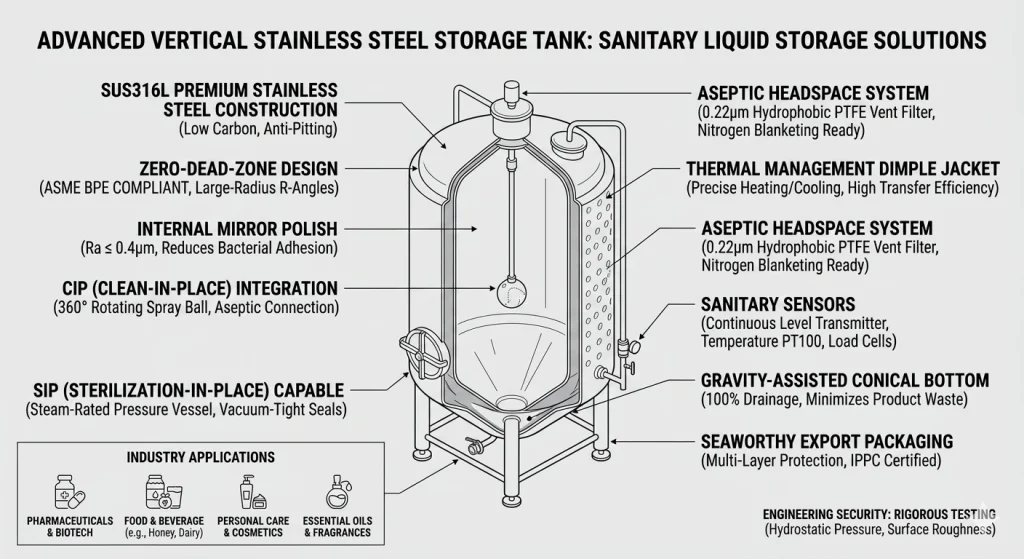
पूर्ण पारदर्शिता सुनिश्चित करने के लिए, हम एक उपयुक्त प्रवृत्ति प्रदान करते हैं।प्रमाणित सामग्री ट्रेसबिलिटी रिपोर्ट (एमटीआर)हर जहाज के साथ, इस बात की गारंटी देते हुए कि धातु विज्ञान वैश्विक सुरक्षा मानकों को पूरा करता है।असप्टिक प्रोसेसिंग उपकरण.
| विशेषता | SUS304 (एआईएसआई 304) | SUS316L (AISI 316L) |
| सबसे अच्छा के लिए | शहद, डेयरी, पेय | आवश्यक तेल, नमकीन, फार्मा |
| कृष्णप्रतिरोध | उच्च | सुपीरियर (एंटी-पिटिंग) |
| कार्बन सामग्री | मानक | अत्यंत निम्न (≤ 0.03%) |
धातु विज्ञान का चयन रक्षा की पहली पंक्ति है।स्वच्छ तरल पदार्थ प्रबंधनजहां कई लोग स्टेनलेस स्टील को एक अदिश श्रेणी मानते हैं, वहीं ग्रेडों के बीच आणविक भिन्नता कठिन प्रसंस्करण वातावरण में बर्तन की आयु तय करती है।
पासिवेशन मानक:प्रत्येक पात्र एक नियंत्रित साइट्रिक या नाइट्रिक एसिड पासीवेशन प्रक्रिया से गुजरता है, जिससे प्रोटेक्टिव क्रोमियम-ऑक्साइड परत गाढ़ी हो जाती है ताकि आपके उच्च शुद्धता वाले उत्पाद में धातु आयन का ट्रांसफर शून्य हो सके।
मोलिब्डेनम का लाभ:SUS316L में 2-3% मोलनिब्डेनम होता है, जो एक ऐसा तत्व है जो क्लोराइड-प्रेरित पिटिंग के खिलाफ मजबूत निष्क्रिय परत बनाता है। यह एक अनिवार्य आवश्यकता है।सैनिटरी तरल भंडारण समाधानसालीन-आधारित औषधियों या अम्लीय रसों को संभालना।
संवेदनशीलता को रोकना:316L (कम कार्बन, ≤ 0.03%) में “L” महत्वपूर्ण है टीआईजी वेल्डिंग प्रक्रिया के दौरान। उच्च-कार्बन स्टील हीट-अस्थायी क्षेत्र में “कार्बाइड वर्णक” का कारण बनता है, जिससे इंटरग्रान्युलर संक्षारण होता है। हमारा कम-कार्बन निर्माण सुनिश्चित करता है कि पात्र रासायनिक रूप से अक्रिय बने रहे, यहां तक कि बार-बार थर्मल सायकलिंग के तनाव में भी, 25 वर्षों से अधिक समय तक।असप्टिक प्रोसेसिंग उपकरण.
मेंअसप्टिक प्रोसेसिंग उपकरण, जो आप नहीं देख सकते वह आपके ब्रांड को नुकसान पहुंचा सकता है। पारंपरिक औद्योगिक टैंकों में अक्सर "छाया क्षेत्र" होते हैं जहां सफाई तरल पर्याप्त गति से नहीं पहुंच पाती, जिससे जैव पर्दे जल्दी बन जाते हैं।
आधुनिक कुल स्वामित्व लागत (TCO) विश्लेषण यह साबित करता है कि टैंक का सबसे महंगा भाग इसकी खरीद मूल्य नहीं है, बल्कि मेंटेनेंस के दौरान आवश्यक परिचालन अवकाश है।स्वच्छ तरल पदार्थ प्रबंधनकार्यप्रवाह।
ऊर्ध्वाधर सैनिटरी टैंक के साथडिंपल जैकेट्ससटीक ताप स्थानांतरण की अनुमति देना, 40°C (104°F) स्थिर बनाए रखते हुए तापमान विचलन को कम से कम रखना±1°Cयह सटीकता महत्वपूर्ण है इसके लिएसैनिटरी तरल भंडारण समाधानउच्च स्नेहशीलता वाले भोजन के उत्पादन में उपयोग किया जाता है।
टैंक्स को फिट किया गया है0.22μm हाइड्रोफोबिक PTFE वेंट फिल्टरवायुजनित संदूषकों का 99.9999% भाग अवरुद्ध करने के लिए, एक मानक अभ्यास है।असप्टिक प्रोसेसिंग उपकरणड्रॉडाउन के दौरान एक स्वच्छ शीर्ष स्थान सुनिश्चित करने के लिए।
हमारे अंतरराष्ट्रीय ग्राहकों के लिए, समाधान तब तक पूरा नहीं माना जाता जब तक टैंक "फैक्टरी-फ्रेश" स्थिति में नहीं पहुंच जाता। हम उपयोग करते हैंसमुद्र के अनुकूल पैकेजिंग(आईपीपीसी-प्रमाणित) और पूर्ण प्रलेख प्रदान करें जिसमें शामिल हैंपानी का स्थैतिक दबाव परीक्षण प्रमाण पत्र,सतह खुरदरापन रिपोर्टें, औरसीई अनुपालन घोषणाएँ.
14 वर्षों की निर्माण उत्कृष्टता के साथ, हमारी इंजीनियरिंग टीम “उत्पादन सुरक्षा” प्रदान करने पर ध्यान केंद्रित करती है। श्रेष्ठता को शामिल करकेसैनिटरी तरल भंडारण समाधानआपकी सुविधा में, हम सुनिश्चित करते हैं कि हर जहाज एक कठोर प्रक्रिया से गुजरता हैकारखाना स्वीकृति परीक्षण (FAT), जिससे आप उपकरण की विफलता की छुपी हुई लागतों के बिना विस्तार पर ध्यान केंद्रित कर सकते हैं।
प्रश्न: जैविक प्रसंस्करण के लिए "शून्य-मृत क्षेत्र" डिज़ाइन इतना महत्वपूर्ण क्यों है?
A:90 डिग्री कोण जैव फिल्मों के पनपने का स्थान होते हैं। हम उपयोग करते हैंबड़ा त्रिज्या वाले वक्र (त्रिज्या >= 10 मिमी)यह सुनिश्चित करने के लिए कि CIP तरल पदार्थ स्थिर प्रवाह बनाए रखें (रेनेस > 4000)। इससे माइक्रोबियल ट्रैप्स समाप्त हो जाते हैं और एक मान्यताप्राप्त परिणाम प्राप्त होता है।10^-6 लॉग-ह्रासजीवाणुओं में, क्रॉस-बैच संदूषण को रोकना।
प्रश्न: SUS304 और SUS316L आपके दीर्घकालिक निवेश पर कैसे प्रभाव डालते हैं?
A:SUS316L में 2-3% मोलिब्डेनम होता है, विशेष रूप से उच्च सॉल्ट या अम्लीय वातावरण के लिए तैयार किया गया है। जबकि प्रारंभिक निवेश अधिक है, इसकी पिटिंग कॉरोजन के प्रति उत्कृष्ट प्रतिरोधकता नाव का जीवनकाल बढ़ाती है।25+ वर्षों, जानलेवा बैच हानि को रोकते हुए कुल स्वामित्व लागत (टीसीओ) को कम कर रहा है।
प्रश्न: स्वच्छ तरल पदार्थ संचालन में शंकु के निचले भाग का आर्थिक लाभ क्या है?
A:शंकुाकार संरचना गुरुत्वाकर्षण का लाभ लेती है।100% शून्य अवशेष निर्वहनउच्च-मूल्य वाले तरल पदार्थ जैसे आवश्यक तेल या फार्मास्युटिकल स्लरी के लिए, यह उत्पाद के अपशिष्ट (अर्थात् "एड़ी") को समाप्त कर देता है और स्वच्छता चक्र के लिए आवश्यक समय और रसायनों को महत्वपूर्ण रूप से कम कर देता है।

व्हाट्सएप

वीचैट
व्हाट्सएप्प:+8615736768129
ईमेल:inquiry@panchimachinery.com
पता: झेंग्झौ, हेनान प्रांत, चीन
स्वचालित वैक्यूम शहद प्रसंस्करण और छानने की मशीन
वैक्यूम निम्न-तापमान द्रव्य निष्कर्षण और सांद्रण इकाई
कस्टम स्टीम डिस्टिलेशन और हीट रिफ्लक्स आवश्यक तेल उपकरण
एसएस 304/316एल कम तापमान वेल्वुम स्क्रैपर कंसन्ट्रेटर
QN वृत्तीय निर्वात संग्राहक एवं शराब पुनःप्राप्ति इकाई
मल्टी-फंक्शन स्टेनलेस स्टील वैक्यूम डिस्टिलेशन एवं एक्सट्रैक्शन यूनिट
गर्म रिफ्लक्स वाक्यूम लिक्विड एक्सट्रैक्शन और कंसंट्रेशन यूनिट
हम आपसे एक कार्यदिवस के भीतर संपर्क करेंगे। कृपया अपने ईमेल पर ध्यान दें।
स्वचालित वैक्यूम शहद प्रसंस्करण और छानने की मशीन
WhatsApp: +8615736768129
ईमेल: inquiry@panchimachinery.com
पता:झेंग्झौ, हुनान प्रांत, चीन


कॉपीराइट© 2026झेंगझोउ पंची मशीनरी उपकरण有限公司|गोपनीयता नीति