
Para pesquisadores farmacêuticos e praticantes de Medicina Tradicional Chinesa (MTC), o desafio central no processamento botânico é técnico:como evitar a degradação do ingrediente ativo durante o processo de purificação herbal?Muitos dos compostos mais valiosos na medicina herbal—tais como óleos voláteis, alcaloides e glicosídeos sensíveis ao calor—são quimicamente frágeis. Quando expostos às altas temperaturas necessárias na fervura tradicional ao ar livre, essas moléculas sofrem decomposição térmica, resultando em um extrato final que é escuro, pobre em aroma e farmacologicamente fraco.
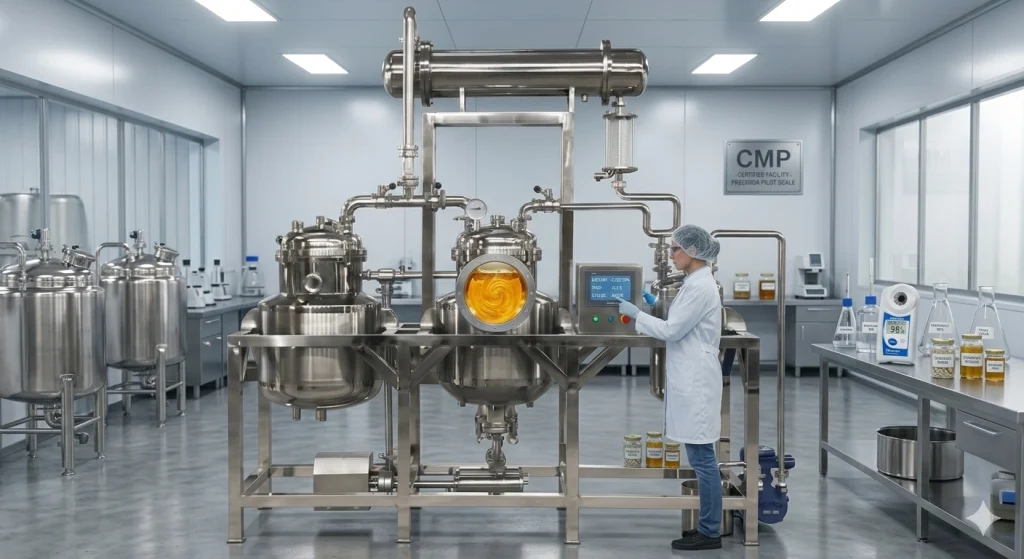
Em fóruns profissionais comoReddit’s r/PharmaeQuora's Química Orgânicaseções, o “paradoxo do ponto de ebulição” é um tema frequente de debate. Os usuários costumam perguntar como podem alcançar altos níveis de concentração sem “cozinhar” os benefícios terapêuticos de seus materiais. A resposta está na aplicação de pressão negativa. Ao utilizar umaUnidade de Extração e Concentração de Líquidos de Baixa Temperatura por Vácuo, os produtores podem reduzir o ponto de ebulição de seus solventes, resolvendo efetivamente o dilema deComo evitar a degradação do ingrediente ativo durante o processo de purificação de ervas.
De acordo com o Google’sPessoas Também Perguntam" (PAA)dados, profissionais estão cada vez mais buscando por:
A realidade técnica é que cada grau de calor acima de 60°C aumenta a energia cinética das moléculas, levando à oxidação e à destruição de enzimas delicadas.Unidade de Vácuo Panchiutiliza um grau de vácuo de ≥0,092 MPa. Nesse ambiente, a água não precisa atingir 100°C para evaporar; ela pode ferver a uma temperatura suave de 45°C a 55°C. Esse baixo impacto térmico é a maneira mais eficaz deevitar a degradação do ingrediente ativo durante o processo de purificação natural, garantindo que a "impressão digital" química do extrato final corresponda ao vegetal bruto.
Uma vulnerabilidade crítica na purificação de ervas é a exposição do extrato ao oxigênio durante a transferência entre diferentes máquinas. Sempre que um líquido quente é despejado ou movimentado, ele oxida. A série FM da Panchi resolve isso ao integrarExtração, Filtração e Concentraçãoem um único sistema de loop fechado.
| Parâmetro | JYJ-50 (Extração) | TNS-50 (Concentração) | Benefício Estratégico |
| Ponto de Ebulição | 45-80 graus Celsius | 45-60 graus Celsius | Evita a decomposição térmica. |
| Material | Aço inoxidável 304 ou 316L | Aço inoxidável 304 ou 316L | Zero contaminação reativa. |
| Polimento | Ra 0,4 μm ou menos | Ra 0,4 μm ou menos | Previne o "emperramento" do material. |
| Pegada | Piloto Compacto | Piloto Compacto | Ideal para hospitais de Medicina Tradicional Chinesa. |
Para realmente dominarComo evitar a degradação do ingrediente ativo durante o processo de purificação de ervas, os operadores devem focar mais do que apenas na máquina; eles devem focar nos dados.
Higiene Polida por Espelho:A degradação também pode ser biológica. Material residual de lotes anteriores pode fermentar ou desenvolver mofo. O interior polido espelhado da unidade Panchi garante que os ciclos de Limpeza no Local (CIP) sejam 100% eficazes, eliminando qualquer risco de degradação entre os lotes.
Controle de Agitação VFDO uso de Variadores de Frequência permite ajustar a intensidade da agitação. Para pastas de alta viscosidade, uma agitação mais lenta e constante evita pontos quentes localizados nas paredes do recobrimento.
O Limite de 45 Graus:Para extratos botânicos altamente sensíveis (como ginsenosídeos ou certos óleos florais), manter um vácuo que permita a evaporação em45 graus Celsiusé o padrão profissional para resultados de “Grau Premium”.
A mudança de decocção tradicional para concentração por vácuo representa uma passagem de “arte” para “ciência exata”. Em um mercado onde consumidores e órgãos reguladores demandam maior potência e menores impurezas, a questão deComo evitar a degradação do ingrediente ativo durante o processo de purificação de ervasnão é mais opcional.
Ao utilizar oUnidade de Extração e Concentração de Líquidos de Baixa Temperatura Panchi Vacuum, os produtores podem garantir um produto padronizado de alta potência. Seja você produzindo pastas herbais personalizadas em pequena escala ou conduzindo pesquisas farmacológicas, a capacidade de controlar o ambiente térmico é o fator mais importante para o seu sucesso.
Q: Este equipamento consegue lidar com extrações à base de água e álcool? Resposta:Sim. O sistema é projetado para extração aquosa e alcoólica. Os parâmetros de vácuo são ajustáveis para garantir que o ponto de ebulição permaneça abaixo do limite de degradação de ambos os solventes.
Q: Como o sistema de condensação impede a perda de óleos voláteis? Resposta:O condensador vertical utiliza circulação de água gelada para reverter rapidamente os vapores de solvente em líquido. Como o sistema é totalmente fechado sob pressão negativa, os óleos voláteis não podem escapar; eles são capturados no concentrado ou recuperados no tanque de solvente.
Q: O equipamento é adequado para instalações certificadas pela GMP? Resposta:Com certeza. Cada superfície de contato é feita de aço inoxidável 304 ou 316L certificado, e o acabamento polido espelhado (Ra 0,4 μm ou menos) atende aos padrões mais rigorosos de higiene e sanitização farmacêutica.


Whatsapp:+8615736768129
Email:inquiry@panchimachinery.com
Endereço: Zhengzhou, Província de Henan, China
Máquina Automática de Processamento e Filtragem de Mel por Vácuo
Unidade de Extração e Concentração de Líquidos de Baixa Temperatura por Vácuo
Equipamento de Destilação a Vapor Personalizado com Refluxo de Calor para Óleos Essenciais
Concentrador a Espanha de vácuo de baixa temperatura SS304/316L
Concentrador de Vácuo Esférico QN e Unidade de Recuperação de Álcool
Unidade de Destilação a Vácuo e Extração de Aço Inoxidável de Multifunções
Unidade de Extração Líquida por Refluxo a Vácuo, Aquecimento e Concentração
Concentrador de Vácuo de Circulação Externa de Efeito Único
Evaporador de Câmara Tripla de Duplo Efeito com Circulação Externa Série SJN
Reator Químico de Aço Inoxidável a Vácuo de Alta Temperatura
Tanque de Precipitação de Álcool a Vácuo 304SS
Panela de Cozimento com Aquecimento a Vapor de Dupla Camada 304SS
Panela de cozimento com aquecimento elétrico e jaqueta
Caldeira de Cozimento com Casco para Aquecimento por Gás de Alta Eficiência
Entraremos em contato com você dentro de um dia útil. Por favor, fique atento ao seu e-mail.
Máquina Automática de Processamento e Filtragem de Mel por Vácuo
Unidade de Extração e Concentração de Líquidos de Baixa Temperatura por Vácuo
Equipamento de Destilação a Vapor Personalizado com Refluxo de Calor para Óleos Essenciais
WhatsApp: +8615736768129
Email: inquiry@panchimachinery.com
Endereço:Zhengzhou, Província de Henan, China


DIREITOS AUTORAIS© 2026Zhengzhou Panchi Machinery Equipment Co., Ltd.|Política de Privacidade