
Глобальный сектор фармацевтики и нутрицевтики претерпевает глубокие перемены, отходя от традиционных методов измельчения к экстремальная миллиграммизация. In 2026, the standard for high-end botanical products is no longer just “fine powder” but “bioactive precision.” As the efficacy of natural products becomes tied to their molecular release rates, the demand for equipment capable of handling “un-grindable” materials—specifically the notoriously fibrous and oily Орех Арека (Бетельный орех)— достиг рекордного значения.
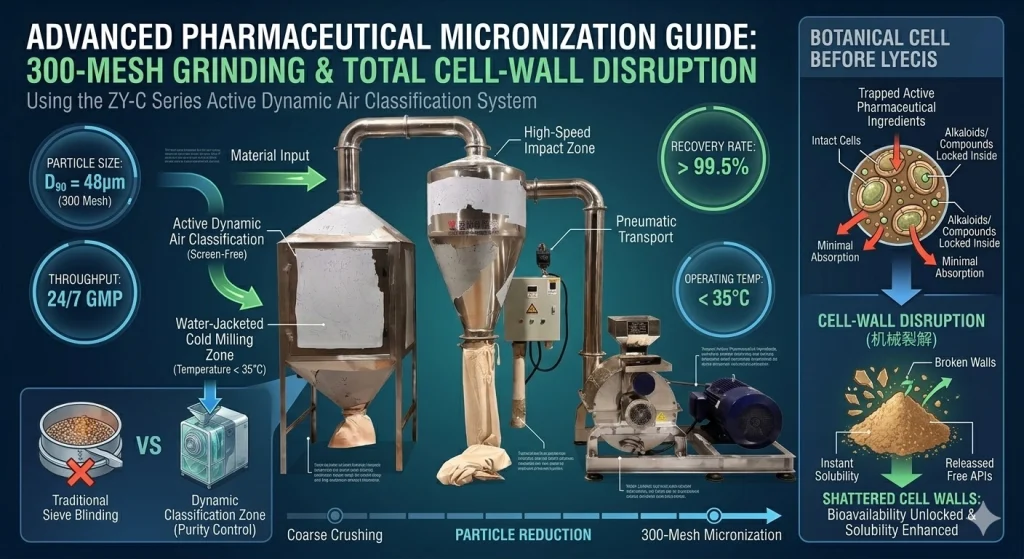
The core challenge lies in the material’s innate resistance to reduction. Traditional methods often compromise the chemical integrity of the alkaloids or fail to reach the particle size necessary for true Нарушение целлюлозной стенкиЭтот анализ исследует физику ботанического измельчения и показывает, почему Серия ZY-C Лечебная травяная мельница ультратонкого помола является окончательным решением для достижения 300-меш (48 мкм) и далее без ущерба для целостности материала.
Чтобы решить проблемы/задачи Молотьба ореха арака, we must first address the mechanical and thermal failure points inherent in legacy systems. Understanding these “points of failure” is essential for any engineer looking to optimize production efficiency and product quality.
Зерна арекы обладают плотной, древесноподобной волокнистой структурой, состоящей из сложных цепей целлюлозы и лігнина. Традиционные молотковые мельницы используют физическую ситу для контроля размера частиц, которая выполняет роль пассивного метода фильтрации.
Орехи араки содержат деликатные алкалоиды, в первую очередь Асколин, и различные полифенолы, которые очень чувствительны к термическим скачкам.
Чтобы количественно определить преимущества современных методов микронизирования, приведённые таблицы описывают технические показатели, необходимые для успешной промышленной переработки.
| Особенность | Традиционная молотковая мельница | ЗУ-К Ультра-Тонкая Мельница |
| Размер частиц (Меш) | 80 – 120 Mesh | 300 – Сито 800 Mesh |
| Материальный сброс | Пассивная сита / Экран | Активный динамический классификатор |
| Обработка волокна | Causes “Коттонзация” | Общая измельчение |
| Управление теплом | Высокий (до 80°C+) | Низкая (ниже 35°C) |
| Нарушение целлюлозной стенки | Минимально (< 15%) | Максимум (> 95%) |
| Сохранение алкалоидов | Низкий (Термическое повреждение) | Высокий (холодное фрезерование) |
| Процент выздоровления | 85% – 92% | 99.5% – 99.9% |
| Целевая сетка | Размер микрона (мкм) | Уровень приложения | Эффект биодоступности |
| 100 Меш | 150 мкм | Стандартная кулинария | Низкий (Клетки сохранились) |
| 200 сетка | 75 мкм | Основная добавка для здоровья | Умеренное освобождение |
| 300 сетка | 48 мкм | Фармацевтическая Grade | Высокий (нарушение клеточной стенки) |
| Меш 500 | 25 мкм | Продвинутая экстракция | Мгновенная растворимость |
| Сито 800 Mesh | 18 мкм | Нано-Ботанические API | Пиковое молекулярное поглощение |
Серия ZY-C решает указанные выше проблемы, заменяя пассивную физическую решетку на Активное динамическое воздушное классированиеЭто представляет собой смену парадигмы в нашем подходе к измельчению волокнистых материалов.
Высокая скорость Классификация ротора создает точное центробежное поле внутри мельницы. Это устраняет механический узкий место сита.
Поддержание низкотемпературной среды имеет ключевое значение для сохранения биоактивности ореха арека.
Достижение 300-сетки — это не просто эстетический выбор; это биологическая необходимость для Нарушение целлюлозной стенкиЭтот процесс является ключом к раскрытию истинной лечебной ценности растительного материала.
Most medicinal compounds are locked within rigid cell walls made of cellulose. Traditional grinding (80-120 mesh) merely breaks the plant into smaller “chunks,” leaving the majority of individual cells intact.
Разрушая клеточный барьер, полученный порошок предоставляет моментальная растворимость Когда употребляется или используется при извлечении:
Инвестирование в ультратонкое Молотьба ореха арака Технология — это стратегическое бизнес-решение, которое влияет на весь цикл производства.
При использовании лекарственных трав высокой ценности материальные отходы напрямую ударяют по прибыли.
Современное производство требует строгого соблюдения гигиенических протоколов.
Q: How does ZY-C prevent “cottonization” during Молотьба ореха арака?
A: Traditional mills shred fibers into a cotton-like mass that clogs sieves. ZY-C utilizes high-velocity impact and immediate air removal to pulverize fibers into fine shards in milliseconds. By removing the material from the grinding zone the moment it reaches the target size, it prevents the mechanical friction and “matting” that characterizes legacy systems.
В: Почему сетка 300-меш — это критически важно для разрушения клеточной стенки?
A: Standard 80-mesh grinding leaves plant cells intact, effectively “locking” active compounds away from the consumer. At 300-меш (48 мкм), the particle size is fine enough to achieve Механическая лизис, разрушая жесткие стенки целлюлозы. Это освобождает алкалоиды и активные фармацевтические ингредиенты, значительно увеличивая биодоступность и растворимость.
В: Может ли система достичь более тонких результатов, например, 800-г_mesh?
A: Да. Серия ZY-C очень адаптивна. Увеличивая обороты классификационного ротора и регулируя объем воздуха через PLC, система создает более сильное центробежное поле. Это позволяет точно выбрасывать частицы размером всего 15-20 мкм (меш 800), при этом сохраняя плотность Д90 распределение, которое важно для равномерного дозирования в фармацевтических применениях.
The Молотьба ореха арака из упорных ботанических ингредиентов к месту 300-грит standard is now a validated industrial process. As global regulations tighten and consumer expectations for “high potency” products grow, the transition from traditional crushing to Ультратонкая микронезация является важным стратегическим шагом.
Объединяя точность of Динамическое воздушное классифицирование с тепловой защитой от Технология холодного фрезерования, the Серия ZY-C дает возможность производителям раскрыть весь потенциал своих растительных сырьевых материалов с помощью абсолютного Нарушение целлюлозной стенкиОна обеспечивает надежность, коэффициенты восстановления и чистоту, необходимые для лидерства на рынке в 2026 году и в будущем.


Вичат
WhatsApp: +8615736768129
Электронная почта: [email protected]
Адрес: Цзэнчжоу, провинция Хэнань, Китай
Automatic Vacuum Honey Processing & Filtering Machine
Vacuum Low-Temperature Liquid Extraction & Concentration Unit
Custom Steam Distillation & Heat Reflux Essential Oil Equipment
Концентратор вакуумного скребка низкой температуры SS304/316L
QN Spherical Vacuum Concentrator & Alcohol Recovery Unit
Multi-function Stainless Steel Vacuum Distillation & Extraction Unit
Hot Reflux Vacuum Liquid Extraction & Concentration Unit
Одноэффектный внешний циркуляционный вакуум-концентратор
Серия SJN Вакуумный испаритель с внешней циркуляцией и двойным эффектом
Химический реактор из нержавеющей стали вакуумного нагрева при высоких температурах
304SS вакуумный промежуточный осаждающий бак для спирта
304SS двухслойочный паровой кухонный горшок
Электрическая отопительная кастрюля с жаропрочной обшивкой
Высокопроизводительный газовый нагревающийся котёл с жаропрочной емкостью
Мы свяжемся с вами в течение одного рабочего дня. Пожалуйста, проверяйте вашу электронную почту.
Автоматическая вакуумная машина для обработки и фильтрации меда
Установка для вакуумной экстракции жидкостей низкотемпературным методом и концентрирования
WhatsApp: +8615736768129
Электронная почта: [email protected]
Address: Цзэнчжоу, провинция Хэнань, Китай


АВТОРСКОЕПРАВО© 2026 Ценчжоу Панчжи Машинери Экипмент Ко., Лтд. | Политика конфиденциальности

Наша команда ответит в течение 24 часов.
Спасибо! Мы свяжемся с вами в течение 24 часов.
Проверьте свой почтовый ящик (и папку спам) на наличие нашего ответа.