
Для промышленных кооперативов по переработке меда, региональных сетей сельскохозяйственных предприятий и многотонных экспортеров, работающих в экваториальных зонах, расширение коммерческого бренда редко ограничено количеством ульев или генетикой пчел. Вместо этого основным барьером, мешающим выходу на высокооплачиваемые мировые рынки — такие как Европейский Союз, Япония и Северная Америка — является невидимая проблема постуборочной физики, которая напрямую связана с гигроскопические проблемы с медом.
Мед — это природный сверхнасыщенный раствор сахара, состоящий в основном из фруктозы и глюкозы. Поскольку его водоактивность (аw) существенно ниже уровня окружающей атмосферы, поэтому он действует как мощный естественный дегидратор. Когда относительная влажность воздуха (RH) регулярно колеблется между 75% и 95% — стандартным климатическим режимом, охватывающим коридоры с муссонными сезонами юго-восточной Азии, влажные речные бассейны Центральной Африки и Латинской Америки — извлечение, фильтрация или обработка мёда в контакте с открытым атмосферным воздухом гарантируют получение продукта с ухудшенными качествами, начинающего бродить.
Поскольку необработанный мед с жаром тянет воду из окружающего воздуха, он запускает катастрофическую цепную реакцию. Эта структурная уязвимость усиливает традиционные тропические проблемы пчеловодства, превращая органический ценный актив в нестабильное обязательство всего за несколько дней после сбора урожая.
Преодоление этого неуклонного повторного увлажнения требует игнорировать упрощённые ремесленные методы сушки на открытом воздухе, которые подвергают карамельную матрицу риску ожогов, уничтожают активные ферменты и портят природный букет ароматов. Вместо этого современные коммерческие операторы должны внедрять строгую герметичную систему контроль влажности после сбора урожая для защиты своих запасов от химического и биологического порчи. Используя передовые методы механики жидкостей, микробной термодинамики, точное производство из нержавеющей стали и вакуумное инженерное дело, современные упаковочные заводы могут систематически исключать дефекты качества, предотвращать финансовые списания и успешно преодолевать эти устойчивые тропические проблемы пчеловодства на многотонной шкале.
Чтобы понять, почему жесткий контроль влажности после сбора урожая обязательно для международной торговли, процессоры должны анализировать пределы осмотического давления осмо-устойчивых диких дрожжей (в первую очередь Зигосаккаромицес виды).
Wild yeasts are naturally present in all сырое honey, harvested straight from the comb by foraging bees. Under normal conditions, where the moisture content is below 18%, the osmotic pressure exerted by the hypertonic sugar solution causes plasmoptysis in yeast cells—effectively drawing вода out of the microbe’s cellular membrane and forcing it into a state of metabolic dormancy.
Однако, когда влажность окружающей среды вызывает ошибку гигроскопические проблемы с медом, повышая общий внутренний уровень влажности выше 19% до 20%, активность воды (aw) переходит от безопасных 0,55 к нестабильным 0,65 или выше. Это разбавление уменьшает осмотическое давление, позволяя спящим дрожжевым спорам восстановить гидратацию, метаболизировать глюкозу и начинать активную ферментацию.
Биохимический путь брожения меда определяется следующей формулой:
Эта реакция приводит к образованию этанола и углекислого газа. Видимыми симптомами являются пенообразование на поверхности, яркий кислый или уксусный аромат и сильное раздувание емкостей для хранения. Кроме того, этанол может окисляться в уксусную кислоту под действием вторичных бактерий, превращая качественный цветочный мед в несоответствующий для продажи медовый уксус.
Для коммерческого соответствия стандарты Кодекса Алиментаариус и Европейская директива по меду требуют строгого соблюдения максимальный предел влажности 20% для общего меда (и 23% для определенного верескового меда). Однако международные покупатели, платящие премиальные цены за продукты розничного качества, регулярно требуют внутреннего заводского стандарта 17,5% до 18,0% гарантировать стабильность полки в различных глобальных логистических цепочках. Следовательно, промышленный масштаб контроль влажности после сбора урожая это не просто эстетический выбор; это основной регулятивный паспорт, необходимый для входа на мировой рынок и выживания в самых жестких условиях тропические проблемы пчеловодства.
Определение размеров промышленного перерабатывающего объекта, настройка паровых котлов и расчет окупаемости инвестиций (ROI) перерабатывающей линии требуют точных расчетов потоков, а не эмпирических догадок. Понимание того, сколько воды нужно удалить из сырья, является первым важным этапом проектирования автоматизированной линии, способной обеспечить непрерывную работу. тропические проблемы пчеловодства.
При концентрировании в условиях отрицательного давления вакуума общая масса чистых твердых веществ меда (фруктоза, глюкоза, органические кислоты, минералы и микронутриенты - пыльца) остается полностью неизменной, в то время как масса воды уменьшается. Точная масса водяного пара, которую необходимо извлечь за каждую партию, чтобы снизить уровень...... гигроскопические проблемы с медом рассчитывается с использованием следующей формулы промышленного материального баланса:
Where:
Mвода = Общая масса водяного пара, подлежащего удалению и конденсации (кг)
Mсырое = Начальная масса сырого тропического медового груза, закачанного в сосуд (кг)
МСсырое = начальный процент содержания влаги (выраженный в виде десятичной дроби)
МСцель = Желаемый целевой процент содержания влаги (выраженный в виде десятичной дроби)
Кейс по инженерному применениюРассмотрите региональное кооперативное объединение, которое накапливает... 2000 кг крупной партии дикий полифлористический джунглевый мед, собранный в разгар сезона дождей при нестабильных условиях 23,0% влажности ( 0.230 ). Цель экспорта — пройти таможню Европы и безопасно обойти региональные ограничения. гигроскопические проблемы с медом является стабильным 17,5% Спецификация класса А ( 0.175 ).
Система обработки должна успешно испарять, эвакуировать и изолировать. 333,33 кг чистой воды Из матрицы меда. Знание этого точного профиля веса позволяет инженерам предприятий точно рассчитывать необходимые тепловые затраты на нагревательные кожухи, правильный размер мотора вакуумного насоса и необходимые объемы охлаждающей воды для последующих конденсационных циклов. Это делает расчеты баланса масс предшествованием для долгосрочного предсказуемого процесса. контроль влажности после сбора урожая.
Мед ведет себя как очень сложная неньютоновская жидкость, демонстрирующая ярко выраженное тхиностропное (зависимое от времени снижение вязкости при сдвиге) и псевдопластическое (разжижение под действием сдвига) поведение. Его внутренняя вязкость увеличивается экспоненциально при понижении температуры или при систематическом удалении воды.
При удалении влаги внутри вакуумной камеры сразу образуется чрезвычайно плотный и высоковязкий пограничный слой, прочно прилипший к нагретым внутренним стенкам устройства. Поскольку у меда низкая теплопроводность (k ≈ 0,5 Вт/м·К), этот статический пограничный слой быстро подвергается локальному пригоранию, вызывая резкий скачок уровня гидроксиметилфурфурола (ГМФ), в то время как ядро массы меда остается холодным, густым и наполненным захваченной водяной парой.
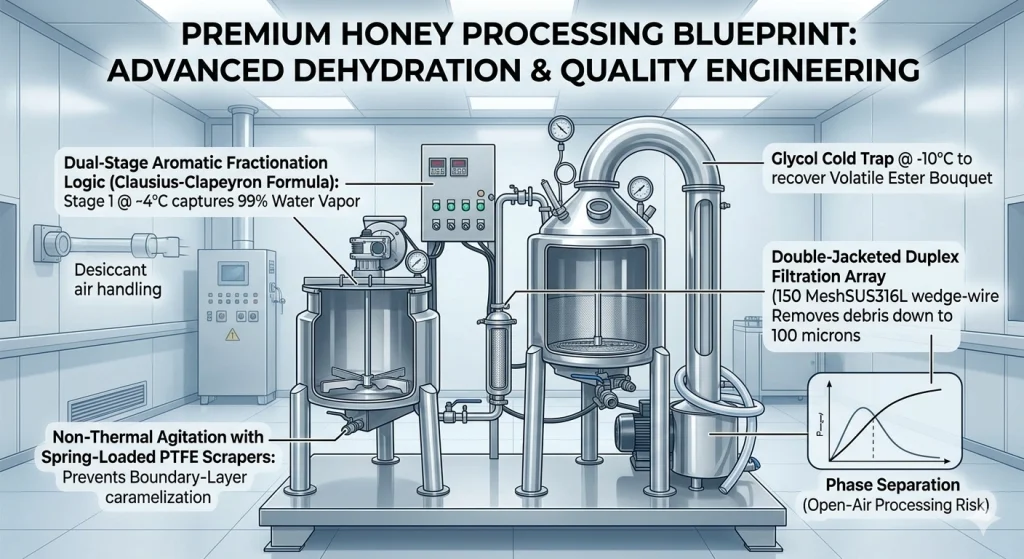
Обход этого термодинамического парадокса требует наличия внутреннего, механического анкерного мешалки низких оборотов, оснащённой непрерывным, самонастройным механизмом. Скребки для стен из PTFE (Тефлон). Благодаря пружинным натяжным планкам, эти скребки постоянно срезают пограничный слой, обеспечивая постоянное обнажение свежего, необогретого меда к тепловому кожуху. Это обеспечивает быстрый и равномерный обезвоживание при безопасных температурах, легко обходя структурные узкие места, которые обычно связаны с тропические проблемы пчеловодства.
Чтобы понять необходимость технологии отрицательного давления, необходимо проанализировать физическое поведение меда, нагретого при нормальном атмосферном давлении (0,1 МПа или 1 бар). При стандартном атмосферном давлении на уровне моря вода закипает при 100°C. Хотя меду не нужно закипать полностью, чтобы испарить воду, для удаления влаги в условиях тяжелого влажного тропического воздуха требуется нагревать жидкость минимум до 65°C—70°C на продолжительное время.
Это воздействие тепла губительно для высокого качества меда из-за двух различных химических явлений:
Синтез гидроксиметилфурфурола (ГМФ)
HMF (C6H6O3) — это органическое соединение, образующееся при кислотно-катализируемой дегидратации фруктозы, являющейся гексозой. В свежем, необработанном меде HMF практически отсутствует или находится ниже 5 мг/кг.
Однако скорость синтеза HMF увеличивается экспоненциально с тепловым воздействием. Последовательность химических реакций следующая:
Международные стандарты импорта (такие как директива ЕС 2001/110/EC) налагают строгие требования максимальный предел HMF 40 мг/кг для меда, происходящего из умеренных регионов, и 80 мг/кг для меда тропического происхождения. Обработка меда с помощью атмосферного нагрева легко повышает уровень ГМФ до более 100 мг/кг за один день, постоянно исключая этот урожай из высокодоходных экспортных каналов и ухудшая вашу тропические проблемы пчеловодства.
Premium honey is valued globally for its biological activity, driven by heat-sensitive enzymes secreted by the honeybee’s hypopharyngeal glands:
Инактивация ферментов следует законам кинетики реакции первого порядка, что характеризуется временем десятичного снижения (D-значением). Например, при 60°C активность инвертазы сокращается на 90% менее чем за 4 часа. При 70°C это разрушение происходит за несколько минут.
Путем переключения на глубокий вакуум -0,092 МПа (примерно 80 мбар абсолютного давления), точка кипения воды искусственно подавляется до безобидного уровня 38°C до 40°CНа этом оптимизированном тепловом диапазоне константа скорости инактивации фермента (k) приближается к нулю, и энергия активации, необходимая для синтеза HMF, никогда не достигается. Это позволяет процессорам выполнять полное контроль влажности после сбора урожая без повреждения тонкого биологического профиля меда.
Помимо остановки брожения дрожжей, контроль влажности после сбора урожая играет важную роль в определении физической продолжительности хранения, текстуры и кристаллизации меда, хранящегося в розничных банках для потребителей.
Когда мед поглощает влагу из влажного тропического воздуха через открытую обработку, распределение воды по всему контейнеру становится очень неравномерным. На поверхности образуется тонкий, разбавленный слой меда. Этот градиент концентрации нарушает естественное отношение глюкозы к воде (G/W), вызывая локальные гигроскопические проблемы с медом.
Мёд с соотношением G/W ≤ 1,7$ обычно остается жидким длительное время, тогда как при соотношении ≥ 2,1 происходит быстрое осаждение. Когда влажность окружающей среды разбавляет поверхностный слой емкости для хранения, это искажает это хрупкое соотношение. Вместо контролируемой, медленной кристаллизации, неравномерно гидратированный мёд переживает неправильную микрокристаллизацию. Большие, острые, разделённые кристаллы глюкозных гидратов (C6H12O6·H2Осаждаться из раствора и опускаться на дно сосуда.
Это оставляет водянистый слой фруктозного сиропа, склонный к образованию дрожжевых грибков, на поверхности контейнера. Такое разделение фазы полностью разрушает визуальную прозрачность продукта, создает двуслойную текстурную неразбериху и отпугивает покупателей в премиум-сегменте.
Обработка меда внутри структурно усиленного -0.092 МПа Вакуумный резервуар устраняет этот текстурный дефект нативно. Высокий вакуум создает интенсивные микровоздушные микротурбуленции низкой температуры по всей колонне жидкости. Пока водяные пары пузырятся, поднимаются, расширяются и схлопываются, кристаллы глюкозы механически разрушаются на микроскопические, однородные кристаллизационные ядра, прежде чем они смогут образовать массивные кристаллические скопления.
Когда этот вакуум-сушеный мед со временем естественным образом кристаллизуется в течение нескольких месяцев на полках магазина, он принимает идеально гладкую, тонкозернистую, кремообразную текстуру вместо грубой, трещиноватой, слоистой матрицы. Это доказывает, что современное оборудование для обработки может эффективно справляться с серьезными тропические проблемы пчеловодства при обновлении ощущение продукта во рту.
Давняя критика вакуумных испарителей низкого класса заключается в том, что они уничтожают уникальный, деликатный цветочный аромат меда, оставляя позади обычный, пресный сладкий сироп. Это происходит потому, что летучие ароматические эфиры, альдегиды и монотерпены, которые определяют премиальные монофлоральные или полифлоральные меды, имеют точки кипения, близкие или ниже точек кипения воды при вакуумных условиях. Это превращает сохранение сенсорных характеристик в одну из самых сложных задач. тропические проблемы пчеловодства сталкиваются современными инженерами.
Для сохранения премиального регионального характера дикого лесного, дикой цветочной или мангровой мёд, современные вакуумные линии обработки используют сложную систему двухступенчатая конденсационная и фракционная цепь.
На последнем этапе обработки, пока обезвоженный мёд аккуратно охлаждается внутри основной емкости, захваченные ароматические фракции растапливаются из холодного ловушки и равномерно вновь смешиваются с партией с помощью анкерного миксера с низкими оборотами. Этот важный шаг обеспечивает сохранение исходных сенсорных характеристик и уникального лесного букета готового экспортного продукта, нейтрализуя потери ароматов, которые иначе происходили бы при стандартной обработке. гигроскопические проблемы с медом.
Промышленная вакуумная установка не существует изолированно; ее эффективность тесно связана с экологическим оформлением окружающего производственного цеха. Без строгого контроля за атмосферой линии упаковки после сбора урожая будут выходить из строя из-за постоянных вторичных факторов. гигроскопические проблемы с медом во время розлива.
Чтобы гарантировать отсутствие попадания влаги во время вторичных этапов — таких как подготовка каркаса, снятие крышек, отбор проб двойной фильтрации и окончательная розничная розливка на высоких скоростях — основное производственное предприятие должно быть организовано в соответствии с Контроль чистой комнаты класса D (ISO 8).
Входящий воздух окружающей среды для этой зоны должен проходить через специализированную систему ОВК, оснащенную активными элементами. сушильные колеса для осушения воздуха а не только стандартные охлаждающие змеевики. Стандартные охлаждающие кондиционеры конденсируют воду за счет охлаждения воздуха, но им трудно снизить относительную влажность ниже 65% в тропическом климате, что полностью не решает системную проблему тропические проблемы пчеловодства.
A desiccant wheel system, utilizing embedded silica gel matrices, mechanically forces the production facility’s ambient climate down to a strict ≤ 40% относительной влажности при комфортной температуре 22℃Это создает мощный экологический барьер: если мед временно подвергается воздействию воздуха помещения при смене контейнера, сборе образцов или встроенной фильтрации, градиент парциального давления окружающего воздуха меняется местами. Сухой воздух помещения предотвращает любое вторичное поглощение, обеспечивая абсолютную защиту для вашего контроль влажности после сбора урожая рабочий процесс и обеспечение целостности экспорта от резервуара до банки.
Чтобы добиться последовательных результатов и устранить человеческую ошибку на производственной площадке, операторы должны строго соблюдать структурированный многоэтапный производственный протокол:
[Phase 1: Charging & Pre-Heating] ──► [Фаза 2: Глубокая вакуумная экстракция] ──► [Phase 3: Cooling & Re-Blending]Для инженерных команд и сотрудников корпоративных закупок, разрабатывающих планы модернизации фабрик, эта матрица содержит базовые технические показатели, необходимые для соблюдения глобальных требований по экспорту и соответствия элитному уровню. контроль влажности после сбора урожая:
| Машинная подсистема | Стандарт технических требований | Прямое эксплуатационное назначение |
| Контакт металлургия | Нержавеющая сталь SUS316L (полированная до Ra ≤ 0,4 мкм) | Удаляет локальную коррозию от органических медовых кислот (pH 3,2 до 4,5) |
| Работоспособность вакуума | ≥ -0.092 МПа рабочее давление по манометру | Понижает порог испарения воды до безопасных для ферментов 38°C |
| Динамика агитации | Анкерный миксер с низкой скоростью вращения и ПТФЕ-скребками с пружинной нагрузкой | Предотвращает карамелизацию пограничного слоя, тепловое отслеживание и обеспечивает равномерное высыхание |
| Термическая доставка | Система циркуляционной горячей воды с низким давлением и крышкой-оболочкой | Обеспечивает мягкий, равномерный теплообмен без высокотемпературных электрических точек нагрева. |
| Управление ароматом | Подморозный гликолевый охладитель для разделительного коллектора | Восстанавливает нежные ароматические эфиры из цветов для аутентичности продукта и превосходного вкуса |
| Интерфейс санитарии | Встроенная циклическая цепь CIP с вмонтированными распылительными головками на 360° | Гарантирует быстрое, стерильное и проверяемое очищение системы без разрушения окружающей среды |
| Платформа автоматизации | Планшетный контроллер с сенсорным экраном и функцией регистрации данных в реальном времени | Метрики обработки записей для удовлетворения строгих международных требований к аудиторским следам и прозрачности |
В: Почему циклы обезвоживания занимают в два раза больше времени и как мы это исправим?
A: Cause: The liquid ring vacuum pump’s sealing вода or the condenser coolant has become too warm due to tropical ambient heat, degrading the pressure differential. Solution: Немедленно спустите и обновите резервуар вакуумного насоса охлажденной водой, а также убедитесь, что контур охлаждения конденсатора стабильно держится ниже 10°C, чтобы восстановить устойчивое вакуумное давление -0,092 МПа.
В: Что вызывает неожиданное потемнение меда во время вакуумного цикла?
A: Cause: Застоявшиеся пограничные слои меда прилипают к внутренним стенкам и пригорают, что часто обусловлено недостаточной механической аэрацией. Solution: Осмотрите и замените изношенные PTFE-скребки с пружинной нагрузкой, а также убедитесь, что вода для нагрева оболочки никогда не превышает 45°C.
В: Почему наш готовый мёд теряет свой региональный цветочный аромат?
A: Cause: Летучие ароматические эфиры обходят тёплый конденсатор и выходят через выпуск вакуумного насоса. Solution: Опустите нижний конденсатоотделитель гликоля на линию холодных ловушек до температуры от -5°C до -10°C, чтобы заморозить, захватить и затем повторно смешать эти ароматические фракции обратно в партию.
В современном мировом рынке меда коммерческий успех основан на трех непоколебимых столпах: абсолютной стабильности, надежной сохранности продукта и подтвержденных доказательствах биологической чистоты. Опора на традиционные методы производства на открытом воздухе в тропических условиях создает ненужные риски обработки, которые могут быстро привести к испорченным урожаям, утрате оптовых контрактов и неконтролируемым последствиям. гигроскопические проблемы с медом.
Перенос вашего рабочего процесса обработки в закрытую, автоматизированную систему Машина для вакуумной дегидрации меда, you transform environmental humidity from a dangerous risk factor into a completely controlled production variable. Isolating your honey inside a -0.092 MPa “dry capsule” preserves sensitive natural enzymes, prevents fermentation, and allows you to confidently execute precision контроль влажности после сбора урожая.
В конечном итоге этот промышленный подход дает возможность кооперативам, брендам и экспортерам преодолевать традиционные ограничения. тропические проблемы пчеловодства, максимизировать свою прибыльность и доставлять премиальный биоактивный мед на рынки высокой ценности по всему миру.


Вичат
WhatsApp: +8615736768129
Электронная почта: [email protected]
Адрес: Цзэнчжоу, провинция Хэнань, Китай
Automatic Vacuum Honey Processing & Filtering Machine
Vacuum Low-Temperature Liquid Extraction & Concentration Unit
Custom Steam Distillation & Heat Reflux Essential Oil Equipment
Концентратор вакуумного скребка низкой температуры SS304/316L
QN Spherical Vacuum Concentrator & Alcohol Recovery Unit
Multi-function Stainless Steel Vacuum Distillation & Extraction Unit
Hot Reflux Vacuum Liquid Extraction & Concentration Unit
Одноэффектный внешний циркуляционный вакуум-концентратор
Серия SJN Вакуумный испаритель с внешней циркуляцией и двойным эффектом
Химический реактор из нержавеющей стали вакуумного нагрева при высоких температурах
304SS вакуумный промежуточный осаждающий бак для спирта
304SS двухслойочный паровой кухонный горшок
Электрическая отопительная кастрюля с жаропрочной обшивкой
Высокопроизводительный газовый нагревающийся котёл с жаропрочной емкостью
Мы свяжемся с вами в течение одного рабочего дня. Пожалуйста, проверяйте вашу электронную почту.
Автоматическая вакуумная машина для обработки и фильтрации меда
Установка для вакуумной экстракции жидкостей низкотемпературным методом и концентрирования
WhatsApp: +8615736768129
Электронная почта: [email protected]
Address: Цзэнчжоу, провинция Хэнань, Китай


АВТОРСКОЕПРАВО© 2026 Ценчжоу Панчжи Машинери Экипмент Ко., Лтд. | Политика конфиденциальности

Наша команда ответит в течение 24 часов.
Спасибо! Мы свяжемся с вами в течение 24 часов.
Проверьте свой почтовый ящик (и папку спам) на наличие нашего ответа.