
น้ำผึ้งมักได้รับการเฉลิมฉลองว่าเป็นอาหารเพียงชนิดเดียวที่แท้จริงแล้วคงอยู่ได้ตลอดไป นักโบราณคดีได้ค้นพบภาชนะบรรจุน้ำผึ้งในอุทยานสุสานอียิปต์โบราณซึ่งยังสามารถกินได้แม้หลังจาก 3,000 ปี อย่างไรก็ตาม สำหรับผู้ผลิตเชิงพาณิชย์สมัยใหม่ น้ำผึ้งเป็นสารชีวภาพที่อ่อนไหวอย่างมากต่อการเน่าเสียหากไม่ได้รับการจัดการด้วยความแม่นยำทางวิทยาศาสตร์
ทั่วแพลตฟอร์มทั่วโลกเช่น เรดดิท, ควอรา, และ ยูทูบผู้เลี้ยงผึ้งและผู้ส่งออกต่างฝันร้ายที่เกิดขึ้นซ้ำ ๆ เหมือนกัน: “My honey jars are leaking,” “There is a thick white foam on top of my product,” หรือ “My premium harvest now tastes like vinegar.”
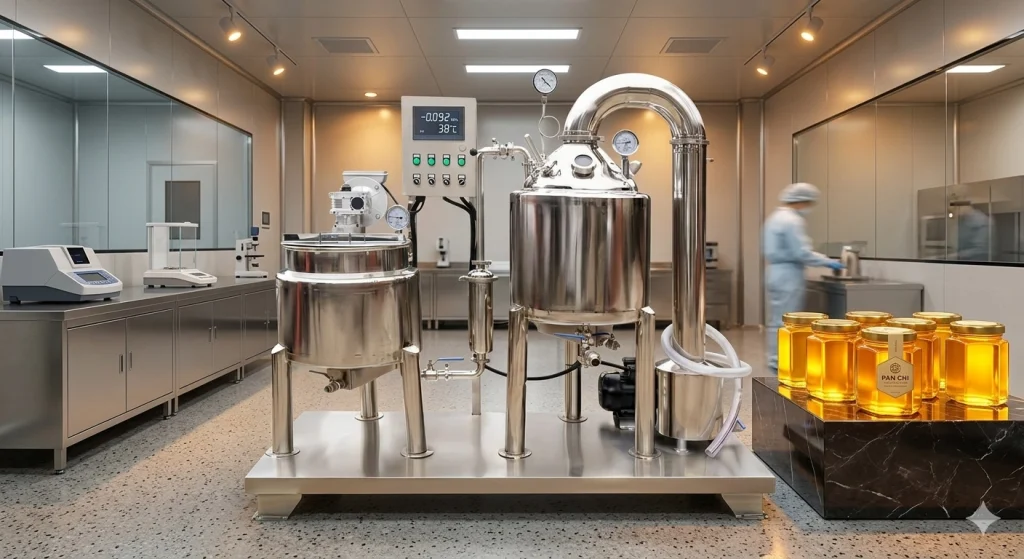
ผู้กระทำความผิดเกือบจะเป็นความชื้นมากเกินไปเสมอ การทำให้หวานแห้ง ไม่ใช่เพียงกระบวนการทางอุตสาหกรรมเท่านั้น แต่เป็นศาสตร์ด้านการอนุรักษ์ที่สำคัญ ในคู่มืออย่างละเอียดนี้ซึ่งมีความยาว 1,500 คำ เราจะสำรวจว่าทำไมการควบคุมความชื้นจึงเป็นสะพานเชื่อมระหว่างสินค้าทางการเกษตรธรรมดาและแบรนด์ซูเปอร์ฟู้ดระดับโลกระดับไฮเอนด์ เราจะวิเคราะห์โดยเฉพาะว่าสาเหตุใด เทคโนโลยสูญญากาศ -0.092 เมกะปาสคาล is the only “proven” method to achieve export-grade stability while protecting the “soul” of the honey.
เชี่ยวชาญ การทำให้ผึ้งแห้งจากนั้น ต้องเข้าใจความสัมพันธ์ระหว่างน้ำตาล น้ำ และจุลินทรีย์ในระดับโมเลกุล การเข้าใจกลไกของ การหมักน้ำผึ้ง เป็นขั้นตอนแรกสำหรับผู้ผลิตอุตสาหกรรมใดๆ มันไม่ใช่เพียงปัญหาในการจัดเก็บเท่านั้น แต่เป็นการต่อสู้กับเชื้อราสปอร์ที่แพร่กระจายอยู่ทุกที่
Honey naturally contains wild, osmophilic (sugar-tolerant) yeasts. In thick, concentrated honey, these yeasts are kept in a state of “osmotic shock”—the high sugar concentration pulls water out of the yeast cells, keeping them dormant. However, honey is ดูดความชื้นหมายความว่ามันดูดซับความชื้นจากบรรยากาศอย่างต่อเนื่อง
เมื่อปริมาณความชื้นเพิ่มขึ้นเกิน 20%, the “Water Activity” (aw) ถึงระดับที่ยีสต์สามารถดูดซับน้ำและเริ่มกระบวนการหมักได้ พวกมันจะบริโภคกลูโคสและฟรุกโตส ซึ่งกระตุ้นโดยปฏิกิริยา:
C6H12O6 → 2C2H5โอเอช + 2คาร์บอนมอนอกไซด์2
The “Bursting Bottle” and Brand Destruction
ผลพลอยได้ของปฏิกิริยานี้คือเอทานอลและคาร์บอนมอนไดออกไซด์2ในขวดปิดสนิทสำหรับขายปลีก การสะสมของก๊าซสร้างแรงดันมหาศาล เพื่อแก้ปัญหานี้ จำเป็นต้องดำเนินการควบคุมความชื้นของน้ำผึ้งโดยมืออาชีพทันทีหลังการสกัด เพื่อให้แน่ใจว่าไซรัปจะไม่สลายตัวเป็นเอทานอลและก๊าซ
ตารางที่ 1: ความเสถียรของน้ำผึ้งเทียบกับระดับความชื้น
| ปริมาณความชื้น (%) | กิจกรรมของน้ํา (aw) | สถานะยีสต์ | ความเสี่ยงทางธุรกิจ |
| 21.0% | 0.65 | การเติบโตเชิงเลขชัน | วิกฤตเน่าเสียภายในไม่กี่สัปดาห์ |
| 19.0% – 20.0% | 0.60 – 0.64 | แอคทีฟ/ไม่เสถียร | สูงความเสี่ยงของการเกิดการหมักในร้านค้าปลีก |
| 18.0% – 19.0% | 0.55 – 0.59 | ยับยั้ง | กลาง: คงที่ถ้านำเก็บในอุณหภูมิเบื้องต้น < 20°C |
| น้อยกว่า 18.0% | < 0.55 | สงบเงียบ | ปลอดภัย: เกรดส่งออกระดับนานาชาติ |
หากคุณเป็นผู้ผลิตที่ต้องการขายในลอนดอน นิวยอร์ก หรือดูไบ น้ำผึ้งของคุณจะต้องผ่านเกณฑ์ด้านคุณสมบัติทางฟิสิโคเคมีที่เข้มงวด สำหรับผู้ส่งออก การเชี่ยวชาญใน การควบคุมความชุ่มชื้นของน้ำผึ้ง มักเป็นความแตกต่างระหว่างการส่งสินค้าให้สำเร็จและการสูญเสียทั้งหมดที่ศุลกากร
ในขณะที่ตลาดท้องถิ่นบางแห่งยอมรับน้ำผึ้งที่มีความชื้น 20% ตลาดระดับพรีเมียมทั่วโลกต้องการ 17.5% ถึง 18.5%. This provides a “safety buffer” against humidity changes during maritime shipping.
Beyond moisture, international buyers use two primary markers to see if you “cheated” during the การทำให้ผึ้งแห้ง กระบวนการโดยใช้ความร้อนมากเกินไป
ตารางที่ 2: การเปรียบเทียบมาตรฐานน้ำผึ้งระดับโลก
| เมตริก | สหภาพยุโรป (2001/110/EC) | สหรัฐอเมริกา (ระดับ USDA เกรด A) | รหัสอาหารขององค์การอาหารและยา |
| ความชื้นสูงสุด | ≤ 20.0% | ≤ 18.6% | ≤ 20.0% |
| ความเสียหายจากความร้อน (HMF) | ≤ 40 มก./กก. | อุตสาหกรรมมาตรฐาน < 40 | ≤ 40 มก./กก. (เขตร้อน ≤ 80) |
| ไดอาสตาส (เอนไซม์) | ≥ 8 หน่วยชาดา | ไม่มีข้อมูล | ≥ 8 หน่วยชาดา |
ความท้าทายที่ยิ่งใหญ่ที่สุดใน การทำให้ผึ้งแห้ง has always been the “Heat vs. Quality” paradox. To evaporate water, you traditionally need heat. But heat kills honey.
ภายใต้อากาศความกดดันมาตรฐาน น้ำเดือดที่ 100°C อย่างไรก็ตาม ด้วยการใช้ปั๊มสุญญากาศสูงเพื่อสร้างสภาพแวดล้อมของ -0.092 เมกะปาสคาลจุดเดือดลดลงถึง 38°C (100.4°F). ประเภทเฉพาะนี้ การทำให้แห้งด้วยสูญญากาศ อนุญาตให้น้ำระเหยในอุณหภูมิที่ไม่ทำลายโปรตีนที่บอบบาง
รังผึ้งธรรมชาติจะถูกรักษาโดยผึ้งให้อยู่ในอุณหภูมิประมาณ 35°C–38°C โดยการดำเนินการ การทำให้ผึ้งแห้ง ที่อุณหภูมิ 38°C เท่านั้น เรากำลังเลียนแบบกระบวนการระเหยธรรมชาติที่เกิดขึ้นภายในรังผึ้ง ซึ่งทำให้แน่ใจว่า:
รอดชีวิตของเอนไซม์: มากกว่า 95% ของดีอัสเทสและอินเวอร์เทสยังคงมีฤทธิ์อยู่
การเก็บกลิ่นหอม: The delicate floral notes don’t “boil away.”
การใช้ การทำให้แห้งด้วยสูญญากาศ ยังให้ประโยชน์ด้านสายตาที่สำคัญอีกด้วย ภายใต้ a สูญญากาศ -0.092 เมกะปาสคาลกลายเป็นว่าฟิสิกส์ของการขยายตัวของก๊าซเข้ามามีบทบาท ไมโครส์บูลขยายตัวไปมากกว่าหลายเท่าของขนาดเดิม ทำให้มันลอยตัวได้สูงมาก
กระบวนการนี้ เรียกว่า การทำให้แห้งด้วยสูญญากาศ degassing, removes the “foggy” look common in raw honey. This results in a brilliant, gemstone-like clarity that commands a premium shelf price and justifies higher retail positioning.
หนึ่งในข้อร้องเรียนที่ดังที่สุดใน ควอรา is that industrial honey “tastes like burnt sugar.” This is the result of the ปฏิกิริยาไมยาร์rdปฏิกิริยาเคมีระหว่างกรดอะมิโนและน้ำตาลรีดิวซ์ซิงที่เกิดขึ้นที่อุณหภูมิสูง
สีน้ำผึ้งอ่อนยังคงรักษาสีทองอ่อนใสบริสุทธิ์ของมันไว้
กลิ่นหอมระบบปิดล้อมจะกักเก็บน้ำมันหอมระเหยที่ระเหยง่าย ซึ่งมักระเหยไปในขณะที่ใช้ความร้อนเปิด
ลงทุนใน การควบคุมความชุ่มชื้นของน้ำผึ้ง is a profit strategy, not an expense. It is the core differentiator between a “bulk agricultural product” and a “luxury wellness brand.”
ตารางที่ 3: การวิเคราะห์ผลกระทบทางธุรกิจและผลตอบแทนการลงทุน
| ตัวขับเคลื่อนกำไร | การขายส่ง (มากกว่า 22%) | ส่งออกพรีเมี่ยม (<18%) | ผลกระทบของ ROI |
| ราคาขายส่ง | $3.00 – $5.00 / kg | $15.00 – $25.00 / kg | กำไร 300% ขึ้นไป |
| อายุการเก็บรักษา | 3 – 6 Months | มากกว่า 24 เดือน | การเรียกคืนลดลง |
| การเข้าถึงตลาด | เฉพาะท้องถิ่น | ทั่วโลก (สหภาพยุโรป/สหรัฐอเมริกา/สหรัฐอาหรับเอมิเรตส์) | สเกลไม่สิ้นสุด |
เพื่อให้ได้ผลลัพธ์ที่สม่ำเสมอและระดับโลก ให้ปฏิบัติตามนี้ แนวปฏิบัติมาตรฐาน (Standard Operating Procedure) ที่ได้รับการพิสูจน์แล้ว:
ก่อนการทำให้แห้ง น้ำผึ้งต้องถูกกรองประมาณ 40-50 ไมครอนเพื่อขจัดเคปแคปปิ่ง ขี้ผึ้ง ชิ้นส่วนผึ้ง และผลึกขนาดใหญ่ ซึ่งจะช่วยให้การกระจายความร้อนในสุญญากาศเป็นไปอย่างเสมอภาค
Never “pour” honey into a tank. Use the vacuum pressure of the machine to “suck” the honey in through a sealed pipe. This prevents the introduction of new air bubbles and environmental dust.
ค่อยๆ เพิ่มอุณหภูมิให้ถึงจุดที่แน่นอน 38°C. Our sensors ensure that no part of the honey touches a surface hotter than 40°C, preventing localized “hot spots” that increase HMF.
Once stabilized, the high-vacuum pump is engaged. You will see the honey begin to “breathe” as water vapor is pulled from the molecular structure without the need for high heat.
ไอน้ำถูกดึงเข้าสู่ตัวควบแน่นเย็น ซึ่งมันจะเปลี่ยนกลับเป็นน้ำในรูปของเหลวและถูกรวบรวมในถังแยกออกมา ซึ่งช่วยให้คุณสามารถวัดจำนวนลิตรของน้ำที่ถูกกำจัดได้อย่างแม่นยำ
อย่าพึ่งพาการประมาณเอง ลองชิมน้ำผึ้งทุก ๆ 30 นาที โดยใช้รีแฟกโตมิเตอร์ดิจิทัลเพื่อให้แน่ใจว่าคุณบรรลุเป้าหมาย (โดยปกติอยู่ที่ 17.5%) ก่อนที่จะหยุดกระบวนการ
Once the target moisture is reached, the honey is discharged directly into a bottling line. Because the honey is still ที่ 38°C, it flows perfectly, requiring no additional “re-heating” for the filling stage.
The global honey market is bifurcating. On one side is “commodity syrup”—cheap, overheated, และ nutritionally dead. On the other side is “Authentic Raw Wellness”—น้ำผึ้งที่มีความเสถียรสูง มีเอนไซม์มาก และมีความสวยงามทางสายตา
โดยการเชี่ยวชาญ การทำให้ผึ้งแห้ง ที่ -0.092 เมกะปาสคาลคุณกำลังเลือกตัวหลังสุด คุณกำลังปฏิบัติตามคำสัญญาที่นางผึ้งได้ให้ไว้สูงสุด: ส่งมอบผลิตภัณฑ์ที่เป็นไปตามธรรมชาติตั้งแต่ต้น แต่ในขณะเดียวกันก็มีความเสถียรทางวิทยาศาสตร์ที่จำเป็นสำหรับชั้นวางสินค้าระดับโลกในยุคปัจจุบัน
พร้อมที่จะยกระดับการเก็บเกี่ยวของคุณให้เป็นมาตรฐานการส่งออกหรือยัง? ติดต่อทีมงานเทคนิคของเราเพื่อการตรวจสอบผลตอบแทนการลงทุน (ROI) แบบกำหนดเองสำหรับสายการผลิตของคุณ
Q: การดูดสูญญากาศแห้งส่งผลต่อจำนวนไดอาสตาซีอย่างไร?
A: ดั้งเดิม การทำให้ผึ้งแห้ง มักใช้ความร้อนสูง (>50°C) ซึ่งทำลายโปรตีนที่ไวต่อความเสียหาย โดยการใช้สูญญากาศสูงในระดับหนึ่ง -0.092 เมกะปาสคาลเรา ลดจุดเดือดของน้ำลงเหลือเพียง 38°Cอุณหภูมิระดับรังนี้รักษาไว้ได้มากกว่า กิจกรรมของไดอัสเทสและอินเวอร์เทสร้อยละ 95, ensuring your product meets the strict “Raw Honey” requirements of the Directive 2001/110/EC ของสภายุโรป.
Q: ทำไมการจัดการ Aw ถึงสำคัญกว่าร้อยละความชื้น?
A: ความชื้นรวมเป็นมาตรฐานวัดค่า แต่ aw (กิจกรรมทางน้ำ) กำหนดความเสี่ยงต่อการเสียอาหารจริง ระดับความชื้นสูงขึ้น aw ด้านบน 0.60, อนุญาตให้ยีสต์ชนิดโอสมอฟิกลีเปิดใช้งาน ยีสต์เหล่านี้จะกระตุ้น การหมักน้ำผึ้ง ผ่านปฏิกิริยาเหล่านี้: ผลลัพธ์ที่ได้ โค2 gas causes the “white foam” and “bursting bottle” syndrome seen in unstable honey. Precision dehydration ที่ -0.092 เมกะปาสคาล ล็อค aw ด้านล่าง 0.55, ทำให้ยีสต์เข้าสู่สภาพนอนหลับถาวรและรับประกันว่าสินค้าของคุณจะไม่เกิดการหมักบนชั้นวาง
คำถาม: การทำให้แห้งด้วยสุญญากาศสามารถปรับปรุงความใสของน้ำผึ้งได้ไหม?
A: ใช่ ผ่านกระบวนการที่เรียกว่า การถ่ายเทอากาศด้วยวิธีสูญญากาศภายใต้ สูญญากาศ -0.092 เมกะปาสคาล, trapped micro-bubbles expand exponentially, rise to the surface, และ collapse. This eliminates the “cloudy” หรือ foggy appearance common in raw honey, resulting in “Gemstone Glow” ความชัดเจน—สัญลักษณ์ภาพระดับพรีเมียมที่รับรองราคาขายปลีกที่สูงขึ้น

วอทส์แอพ

เว่ยแชท
วอทส์แอพ: +8615736768129
อีเมล: [email protected]
ที่อยู่: จิงโจว มณฑลเหอหนาน ประเทศจีน
Automatic Vacuum Honey Processing & Filtering Machine
Vacuum Low-Temperature Liquid Extraction & Concentration Unit
Custom Steam Distillation & Heat Reflux Essential Oil Equipment
เครื่องรวมสารดูดสูญญากาศอุณหภูมิต่ำ SS304/316L
QN Spherical Vacuum Concentrator & Alcohol Recovery Unit
Multi-function Stainless Steel Vacuum Distillation & Extraction Unit
Hot Reflux Vacuum Liquid Extraction & Concentration Unit
เครื่องเข้มข้นสูญญากาศแบบวนเวียนภายนอกแบบเอฟเฟ็กต์เดียว
เครื่องระเหยสูญญากาศแบบหมุนเวียนภายนอกแบบสองผลกระทบ ซีรีส์ SJN
เราจะติดต่อท่านภายในหนึ่งวันทำการ กรุณาตรวจสอบอีเมลของท่าน
เครื่องทำความร้อนและกรองน้ำผึ้งอัตโนมัติ
หน่วยดูดของเหลวด้วยสุญญากาศที่อุณหภูมิต่ำ สำหรับการสกัดและเข้มข้น
อุปกรณ์กลั่นไอน้ำแบบกำหนดเองและเครื่องมือที่ใช้ในการกลั่นด้วยความร้อนย้อนกลับสำหรับน้ำมันหอมระเหย
ลิขสิทธิ์© 2026 บริษัท จงโจว ปันฉี Machinery Equipment จำกัด | นโยบายความเป็นส่วนตัว

ทีมของเราจะตอบกลับภายใน 24 ชั่วโมง
ขอบคุณ! เราจะติดต่อกลับภายใน 24 ชั่วโมง
ตรวจสอบกล่องจดหมายของคุณ (และโฟลเดอร์สแปม) เพื่อดูคำตอบของเรา


