
Thị trường quốc tế về các loại thảo mộc tinh khiết cao đang trải qua một sự chuyển đổi lớn. Trong lĩnh vực chế biến thực phẩm cao cấp, danh mục dầu thơm của các công ty, và ngành dược phẩm toàn cầu, các nhà mua hàng xuyên biên giới—như các giám đốc chuỗi cung ứng và kỹ sư hóa học trưởng—không còn chấp nhận các loại chiết xuất tiêu chuẩn, đục hoặc bị hỏng do nhiệt. Họ yêu cầu các loại dầu trong suốt, ổn định theo phân đoạn, và có độ tăng cường cao, giữ vững sự ổn định của lô hàng trong nhiều tháng vận chuyển bằng đường biển.
Tuy nhiên, xử lý các ma trận thực vật thô như Tiêu Sichuan, Tiêu đen, Đinh hương, Bạch đậu khấu, Thì là đưa ra một cuộc khủng hoảng chiết xuất nghiêm trọng. Khác với việc xử lý các lá đơn giản như bạc hà hoặc hương thảo, những nguyên liệu thô này chứa một ma trận phức tạp gồm hai thành phần: dầu thiết yếu dễ bay hơi và lipids cố định không bay hơi (chất béo mang, nhựa nặng và sáp thực vật).
Khi trải qua quá trình chưng cất hơi nước hoặc dung môi thông thường, hai phân đoạn này hình thành các liên kết đồng chưng cất, hỗn hợp gần azeotrop và nhũ tương chặt chẽ. Kết quả là sản phẩm cuối cùng có màu tối, độ nhớt cao, chứa các lipit nặng không đạt chứng nhận tinh khiết bằng phân tích khí - khối phổ (GC-MS) và các hồ sơ hương thơm cao cấp.
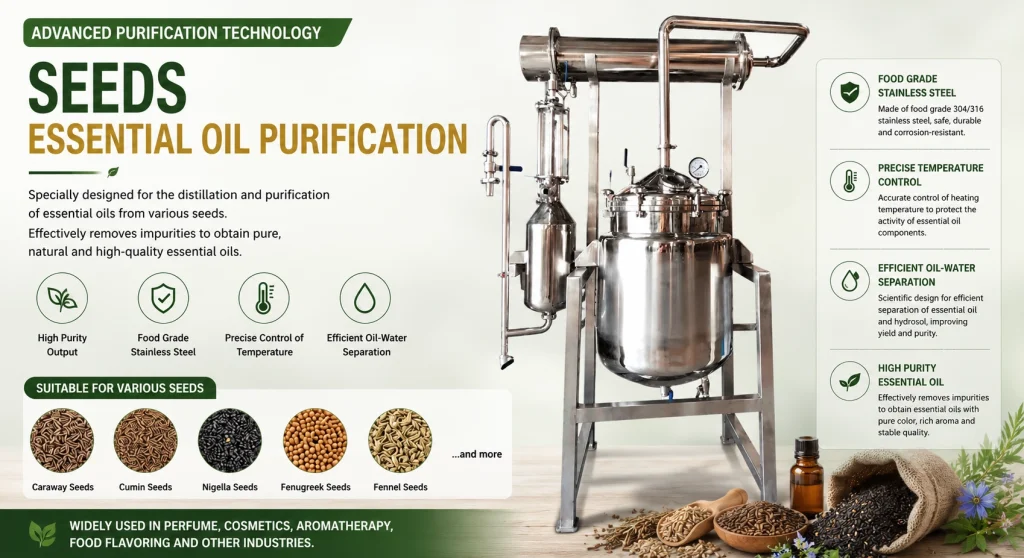
Để giải quyết vấn đề này, các cơ sở xử lý hiện đại phải vượt qua việc khai thác sơ khai và triển khai các phương pháp nhắm mục tiêu Tinh dầu hạt giống Làm sạch, nâng cao Tinh dầu gia vị tinh khiết, và nhiệt động học vòng kín thông qua một thương mại Hệ thống chưng cất phân đoạn dầu thảo mộc và gia vị.
(Insights synthesized from operator forums across Reddit’s r/chemicalengineering, Quora extraction threads, và YouTube industrial teardowns)
When evaluating why automated processing plants struggle with seed và spice biomass, several recurring real-world failures stand out across industry forums và “People Also Ask” search queues:
Các nhà hóa học trên Reddit thường lưu ý rằng dung môi không phân cực hoặc hơi nước ở nhiệt độ cao hút các lipid nặng và sáp cùng với các phân đoạn terpen nhẹ hơn. Khi các chất béo này đạt đến điểm sôi của chúng, chúng gây ra hiện tượng mang theo cơ học, nâng các hạt nhỏ của các chất béo mang tinh chất nặng vào dòng hơi sạch. Điều này tạo ra một phẩm trắng mịn, khiến quá trình lọc đơn giản ở phía sau trở nên cực kỳ khó khăn. Đây chính là điểm tắc nghẽn mà quá trình xử lý tiêu chuẩn gặp phải, làm nổi bật sự cần thiết cấp thiết của một loại sản phẩm công nghiệp chất lượng cao Hệ thống chưng cất phân đoạn dầu thảo mộc và gia vị để xử lý sự phân tách ở cấp độ nhiệt động học.
YouTubers detailing large-scale botanical processing often showcase how overheating biomass ruins the profile. High-value compounds like eugenol in cloves or piperine derivatives in black pepper lose their fresh top notes và develop a “burnt” or “cooked” off-flavor when exposed to prolonged temperatures above 100 degrees Celsius at atmospheric pressure. This problem cannot be solved by simple boiling; it requires a specialized machine to execute low-temperature Tinh dầu gia vị tinh khiết.
Gia vị và hạt giống chứa các loại axit hữu cơ phản ứng và phenol hoạt tính. Khi được xử lý trong các nồi chưng cất bằng thép không gỉ tiêu chuẩn 304 hoặc đồng chất lượng thấp, các bề mặt kim loại sẽ gặp phải quá trình ăn mòn vi mô theo thời gian. Điều này khiến các kim loại nặng còn sót lại hòa tan vào sản phẩm tinh khiết cuối cùng, ngay lập tức gây ra các phản hồi từ các kiểm tra tuân thủ của EU và FDA. Bất kỳ cơ sở nào muốn mở rộng quy mô đều cần đảm bảo rằng... Tinh dầu hạt giống Làm sạch Thiết bị sử dụng khung kim loại học vượt trội để đảm bảo tuân thủ tiêu chuẩn quốc tế về độ tinh khiết.
Đối với các sản phẩm nông nghiệp đặc dụng như nhục đậu khấu hoặc hạt thì là, việc đạt được thành công Tinh dầu hạt giống Làm sạch đòi hỏi một quy trình công nghệ chiến lược. Dầu thường bị khóa chặt bên trong thành tế bào cứng của vỏ hạt.
Hạt nguyên chưa qua chế biến phải được xay thô hoặc trải qua các chu kỳ đông - rã nhanh để mở vỏ. Nghiền mịn hạt trong máy nghiền tốc độ cao tạo ra nhiệt ma sát dư thừa, khiến các hợp chất nhẹ dễ bay hơi như terpen bị thoát ra trước khi chúng đến buồng chiết xuất. Đúng Tinh dầu hạt giống Làm sạch dựa vào việc duy trì sinh khối đủ bền để ngăn chặn mất hơi sớm trong khi tiếp xúc các tế bào dầu bên trong với gradient nhiệt.
Trong quá trình tinh chế, hệ thống phải sử dụng các tham số chân không chính xác để kéo các hợp chất thơm dễ bay hơi ra khỏi các dầu cố định nặng (như triglyceride đặc trong đậu mềm). Bằng cách giảm áp suất bên trong hệ thống, bạn có thể hạ nhiệt điểm sôi của các dầu dễ bay hơi, cho phép chúng bốc hơi và thoát ra trước khi các lipid nặng tan chảy và đồng chưng cất. Đó là lý do tại sao các nồi hơi tiêu chuẩn không thành công, trong khi đó một thiết bị chuyên dụng lại có thể... Tinh dầu hạt giống Làm sạch giao thức thành công.
Hơn nữa, thực thi Tinh dầu hạt giống Làm sạch tại quy mô có nghĩa là kiểm soát tốc độ hơi-kết hợp trong cột. Nếu hơi bay lên quá nhanh, nó tạo ra hiện tượng cuốn theo cơ học, kéo theo những giọt nhỏ của các loại chất béo mang lớn vào bể thu gom sản phẩm tinh khiết. Giữ nguyên một quá trình sôi chậm, đều, dưới áp suất chân không là nguyên tắc vàng để thành thục Tinh dầu hạt giống Làm sạch mà không làm giảm năng suất.
Khi làm việc với các vật liệu như tiêu Tứ Xuyên hoặc tiêu đen, mục tiêu của Tinh dầu gia vị tinh khiết là để cô lập các hợp chất organoleptic tinh khiết, hoạt động trong khi loại bỏ các nhựa đắng không bay hơi và các loại thuốc nhuộm nặng.
Để đạt được điều này trên quy mô công nghiệp, hệ thống xử lý phải duy trì một mức chân không cực kỳ ổn định. Ví dụ, duy trì áp suất âm ổn định khoảng -0,085 MPa làm thay đổi đáng kể hành vi sôi của các phân tử. Trong những điều kiện chân không sâu này, khoảng cách độ bay hơi tương đối giữa phần nhẹ dễ bay hơi và các nhựa gia vị nặng mở rộng đáng kể, cho phép quá trình diễn ra không bị cản trở Tinh dầu gia vị tinh khiết.
Các phân đoạn thơm nhẹ chuyển đổi sạch sẽ sang pha khí ở nhiệt độ thấp hơn (thường từ 40 độ C đến 55 độ C). Điều này cho phép chúng chảy lên qua đầu cột trong khi để lại các cặn nặng đậm, phototoxic hoặc đắng an toàn ở đáy hệ thống, đạt được sự hoàn hảo Tinh dầu gia vị tinh khiết.
Không có ngưỡng chân không sâu này, cố gắng Tinh dầu gia vị tinh khiết việc trồng các cây gia vị tinh khiết cao gần như là không thể, vì năng lượng nhiệt cần thiết để biến các hợp chất này thành hơi ở áp suất khí quyển làm phân hủy các monoterpen dễ bay hơi tinh tế.
Cơ sở công nghiệp không nhận ra sự khác biệt này thường sản xuất các chiết xuất gia vị có chất lượng thấp, màu đục, không đạt tiêu chuẩn quốc tế. Triển khai phương pháp tự động, dựa trên cảm biến để Tinh dầu gia vị tinh khiết đảm bảo rằng các nốt hương chính được cố định, màu sắc vẫn trong suốt như nước hoặc hơi hồng nhạt, và thành phần hóa học phản ánh một chiết xuất thương mại cao cấp.
Khi các thiết lập chiết xuất tiêu chuẩn không phân tách được các phân đoạn thực vật có nhiệt độ sôi tương tự, một hệ thống chân không cao, nhiều giai đoạn Hệ thống chưng cất phân đoạn dầu thảo mộc và gia vị trở nên hoàn toàn cần thiết. Thay vì xử lý hơi như một khối lượng đơn lẻ, hệ thống chuyên dụng này sử dụng cột phân đoạn nội bộ để thiết lập nhiều giai đoạn cân bằng.
Khi luồng hơi phức tạp tăng lên qua cột của Hệ thống chưng cất phân đoạn dầu thảo mộc và gia vị, high-boiling waxes và unwanted lipids lose kinetic energy early, condense on the inner column walls, và safely reflux back down into the residue vessel. This provides an automated “winterization” effect right inside the system, saving thousands of dollars in external solvent costs và processing steps.
Một đặc điểm quan trọng của chúng tôi đặc biệt Hệ thống chưng cất phân đoạn dầu thảo mộc và gia vị là việc giảm thiểu áp lực tụt trong cột nội bộ. Bằng cách sử dụng lớp packing cấu trúc tối ưu thay vì các đĩa truyền thống, hệ thống đảm bảo luồng hơi diễn ra dễ dàng với trở lực tối thiểu. Điều này ngăn chặn các đợt tăng áp suất tại đáy cột, đảm bảo rằng những chất lỏng nhạy cảm của bạn không bị ảnh hưởng. Tinh dầu gia vị tinh khiết hồ sơ không bao giờ bị ảnh hưởng bởi các điểm nóng cục bộ.
Các nhà vận hành công nghiệp cần có khả năng kiểm soát toàn diện quá trình. Sử dụng các thành phần kính chịu nhiệt borosilicate chất lượng cao trong việc này Hệ thống chưng cất phân đoạn dầu thảo mộc và gia vị cho phép các kỹ sư nhà máy quan sát trực tiếp đường ngưng tụ và mặt thoáng của chất lỏng trong thời gian thực. Việc kiểm soát chính xác việc cắt phân đoạn này có thể tăng tỷ lệ thu hồi dầu chất lượng cao lên đến 15%.
Bằng cách điều chỉnh tỷ lệ phản hồi nhiệt trong đó Hệ thống chưng cất phân đoạn dầu thảo mộc và gia vị, các kỹ sư có thể chọn mở rộng hoặc thu hẹp phần cắt phân số. Sự linh hoạt này đảm bảo rằng dù nhà máy đang xử lý dầu thảo mộc có tính dễ bay hơi cao hay chiết xuất hạt dày đặc, giàu lipid, máy móc đều thích nghi để mang lại độ tinh khiết hóa học tối đa.
Để hỗ trợ các đội kỹ thuật và các giám đốc mua hàng đánh giá các nâng cấp thiết bị, bảng dưới đây làm nổi bật sự khác biệt về hiệu suất giữa các cấu hình phổ biến này:
| Thông số kỹ thuật & vận hành | Chưng cất khí quyển nguyên thủy | Các thiết bị chưng cất phân tử Chuẩn / Đường đi ngắn | Hệ Thoáng Chung Tách Liệu Phân Mẫu Panchi |
| Phân tách lipid dễ bay hơi vs. cố định | Kém; các chất sáp nặng thường gây ô nhiễm dầu chưng cất cuối cùng. | Vừa phải; hiệu quả cho việc tách cơ bản nhưng gặp khó khăn với các điểm sôi gần nhau. | Xuất sắc; quá trình phản hồi nhiều giai đoạn tại chỗ đạt được việc loại bỏ parafin hoàn toàn. |
| Rủi ro phân hủy mùi thơm | Cao; tiếp xúc nhiệt kéo dài ở 100°C làm hỏng các nốt hương đầu tươi mới. | Thấp; thời gian lưu trú ngắn giúp ích, nhưng thiếu các giai đoạn phân đoạn. | Không sốc nhiệt; chân không sâu giữ nhiệt độ sôi dưới 55°C. |
| Khả năng mở rộng quy trình và tự động hóa | Thấp; đòi hỏi phải liên tục quét tay thủ công và xử lý tốn nhiều công sức. | Vừa phải; kích thước lô hàng bị giới hạn bởi diện tích bề mặt của bộ bay hơi. | Cao; dòng chảy ngược liên tục của cột cho phép cắt phân đoạn tự động, có thể lặp lại. |
| Khả năng chịu vật liệu & Độ tinh khiết | Thép không gỉ cỡ cơ bản 304; dễ bị ăn mòn do phenol thực vật hoạt tính. | Nặng kính; dễ vỡ đối với sàn nhà nhà máy công nghiệp cứng, có lưu lượng lớn. | Thép carbon thấp 316L & Borosilicate nặng; không rò rỉ kim loại. |
Để duy trì lợi nhuận tuyệt đối trên sàn nhà máy, một cơ sở xử lý không thể bỏ lỡ thời gian ngừng hoạt động dài hoặc những can thiệp thủ công, theo lô. Đây chính là lý do tại sao việc kết hợp của bạn Tinh dầu hạt giống Làm sạch bước với một tự động hóa Hệ thống chưng cất phân đoạn dầu thảo mộc và gia vị tạo ra lợi thế cạnh tranh ngay lập tức.
Các phương pháp đông lạnh truyền thống làm chậm quá trình sản xuất, buộc các nhà vận hành phải chờ đến 48 giờ để chất béo trong nhà máy kết tinh trong các bể làm lạnh lớn. Ngược lại, một hệ thống tuần hoàn liên tục xử lý việc tách này ngay trong quá trình vận hành.
Khi hơi gia vị thô được cung cấp vào hệ thống, gradients nhiệt độ cho phép sự liên tục Tinh dầu gia vị tinh khiếtCác chất béo nặng tác động vào vùng lạnh của cột đóng đầy, làm lỏng và chảy ra qua van xả phía dưới mà không làm gián đoạn chu trình chưng cất chính. Điều này có nghĩa là cơ sở của bạn có thể vận hành liên tục 24/7 các ca làm việc, tối đa hóa năng suất sinh khối hàng ngày.
Kiểm soát độ sâu của máy hút tự động đóng vai trò như trung tâm thần kinh tối cao của hoạt động hệ thống. Bởi vì một hệ thống tiên tiến Hệ thống chưng cất phân đoạn dầu thảo mộc và gia vị tích hợp một mảng cảm biến độ chính xác cao, máy tự động điều chỉnh nhỏ nguồn nhiệt độ mỗi khi có các dao động áp suất nhỏ—do sự bay hơi nhanh của độ ẩm còn lại—xảy ra trong cột. Vòng tự hiệu chỉnh này thành công trong việc bảo vệ liên tục Tinh dầu hạt giống Làm sạch chạy chống lại các lỗi hoạt động của con người.
Đối với các doanh nghiệp khai thác muốn xuất khẩu các loại thực vật tinh khiết cao tới các thị trường Bắc Mỹ, châu Âu hoặc châu Á - Thái Bình Dương, quy trình tinh chế kỹ thuật của bạn phải phù hợp với các khuôn khổ quy định quốc tế nghiêm ngặt và tiêu chuẩn chất lượng được chứng nhận:
Một điểm tạo sự khác biệt chính của dòng cao cấp của chúng tôi Hệ thống chưng cất phân đoạn dầu thảo mộc và gia vị là khả năng cung cấp lợi tức đầu tư vượt trội thông qua toàn diện phục hồi tài nguyên.
Khi tiến hành Tinh dầu hạt giống Làm sạch Về các chất như nhục đậu khấu hoặc thảo quả, các chất nặng còn lại trong buồng chưng cất không phải là chất thải công nghiệp. Trong quá trình nhẹ nhàng, điều khiển chân không và không gây phá hủy của chúng tôi, các chất dư này là các loại dầu cố định tinh khiết cao, không saponifiable, triglyceride thực vật và sáp giàu dinh dưỡng.
Các phụ phẩm này có thể được xả sạch qua van vệ sinh dưới đáy và bán trực tiếp cho các thị trường mỹ phẩm công nghiệp, sản xuất xà phòng, xử lý da, hoặc phủ nông nghiệp. Bằng cách kết hợp lõi của bạn Tinh dầu gia vị tinh khiết dòng với kế hoạch kiếm tiền từ cặn, cơ sở của bạn loại bỏ hoàn toàn chi phí xử lý chất thải và tạo ra một nguồn doanh thu phụ cực kỳ ổn định có thể thúc đẩy thời gian hoàn vốn thiết bị lên đến 35%.
Mở rộng thành công một doanh nghiệp khai thác sang các thị trường toàn cầu có biên lợi nhuận cao đòi hỏi sự chuyển đổi từ chưng cất nhiệt độ cao cơ bản sang phân tách vật lý chính xác cao. Triển khai các quy trình làm việc tự động, chuyên dụng để Tinh dầu hạt giống Làm sạch và Tinh dầu gia vị tinh khiết—được cung cấp năng lượng bởi một loại chắc chắn, có tiêu chuẩn công nghiệp Hệ thống chưng cất phân đoạn dầu thảo mộc và gia vị— cho phép các nhà máy chế biến duy trì việc đạt mục tiêu GC-MS thuần khiết một cách đều đặn, giữ gìn các đặc điểm mùi thơm tinh tế và đảm bảo các hợp đồng cung ứng quốc tế có lợi nhuận cao.
A: Mây mù xảy ra vì nhiệt độ chưng cất cao khiến các lipid cố định nặng, sáp thực vật và dầu mang theo phân tán cùng các phân đoạn dễ bay hơi của bạn. Để cố định vĩnh viễn, bạn phải thực hiện quá trình chân không. Tinh dầu hạt giống Làm sạch. Maintaining a stable -0.085 MPa deep vacuum lowers the boiling point to 40°C – 55°C, expanding the volatility gap và trapping heavy lipids at the bottom of the column while delivering a water-white, crystal-clear distillate.
A: Tiếp xúc nhiệt kéo dài trên 100°C làm hỏng các monoterpen tinh tế và biến đổi các phân tử hương vị quan trọng như eugenol hoặc piperine. Đạt được tiêu chuẩn chuyên nghiệp Tinh dầu gia vị tinh khiết đòi hỏi phải thay thế quá trình sôi ở nhiệt độ cao bằng phân đoạn chân không ở nhiệt độ thấp. Sử dụng công nghệ tiên tiến Hệ thống chưng cất phân đoạn dầu thảo mộc và gia vị giữ nhiệt độ xử lý cực thấp và giới hạn thời gian lưu trú của vật liệu trên các bề mặt nung, giúp giữ lại hương thảo mộc tươi ngon, tự nhiên mà không bị sốc nhiệt.
A: Chuẩn vẫn thiếu khả năng vật lý để phân tách các thành phần sôi gần nhau, dẫn đến ô nhiễm dầu mỡ. Một thiết bị chuyên dụng Hệ thống chưng cất phân đoạn dầu thảo mộc và gia vị sử dụng lớp packing cấu trúc hiệu quả cao để thiết lập sự ngưng tụ liên tục tại chỗ. Khi hơi bay lên, các hợp chất đắng có điểm sôi cao và các chất tạo màu nặng mất năng lượng động học và chảy ngược xuống, loại bỏ sự cuốn theo cơ học và tăng khả năng thu hồi dầu thiết yếu chất lượng cao lên tới 15%.


WhatsApp: +8615736768129
Email: [email protected]
Địa chỉ: Trịnh Châu, tỉnh Hà Nam, Trung Quốc
Automatic Vacuum Honey Processing & Filtering Machine
Vacuum Low-Temperature Liquid Extraction & Concentration Unit
Custom Steam Distillation & Heat Reflux Essential Oil Equipment
Tập trung khí chân không nhiệt độ thấp SS304/316L
QN Spherical Vacuum Concentrator & Alcohol Recovery Unit
Multi-function Stainless Steel Vacuum Distillation & Extraction Unit
Hot Reflux Vacuum Liquid Extraction & Concentration Unit
Chưng Cất Hơi Xuyên Bên Ngoài Hiệu Ứng Đơn
Máy bay hơi chân không tuần hoàn ngoài dòng SJN Series kiểu hiệu đôi
Chúng tôi sẽ liên hệ với bạn trong vòng một ngày làm việc. Vui lòng chú ý đến email của bạn.
Máy xử lý và lọc mật ong tự động bằng chân không
Bộ Tách và Tinh Chế Lỏng Nhiệt Độ Thấp trong Không Khí Vacuum
Thiết bị chưng cất hơi nước tùy chỉnh và hệ thống hồi nhiệt để chiết xuất dầu essential
WhatsApp: +8615736768129
Email: [email protected]
Address: Thành phố Trịnh Châu, tỉnh Hà Nam, Trung Quốc


BẢO HÀNH © 2026 Công ty TNHH Máy móc Thiết bị Panchi Trịnh Châu | Chính sách Bảo mật

Nhóm của chúng tôi sẽ phản hồi trong vòng 24 giờ.
Cảm ơn! Chúng tôi sẽ liên hệ lại với bạn trong vòng 24 giờ.
Kiểm tra hộp thư đến (và thư rác) của bạn để nhận phản hồi của chúng tôi.