
Trong ngành công nghiệp dược phẩm và thực vật học, việc chọn lựa đúng Cài đặt nhiệt độ chiết xuất bằng nước so với cồn là yếu tố chính quyết định hiệu quả cuối cùng của một chiết xuất. Phương pháp đun sôi truyền thống ở nhiệt độ khí quyển thường làm mất các hợp chất nhạy cảm với nhiệt, nhưng công nghệ chân không hiện đại đã thay đổi tiêu chuẩn cho các tham số này. Bằng cách điều chỉnh áp suất khí quyển, the Thiết bị Chiết xuất và Tập trung Lỏng nhiệt độ thấp bằng chân không Panchi allows processors to operate at significantly lower boiling points, effectively protecting the “active fingerprint” of the raw material.
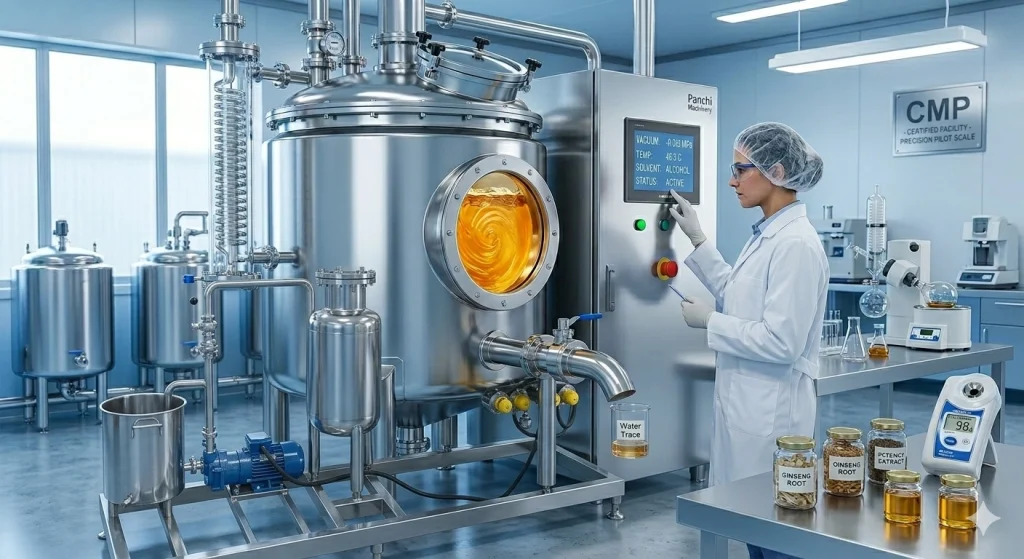
Các cuộc thảo luận trên các nền tảng chuyên nghiệp như Reddit’s r/Pharma và Quora’s Organic Chemistry sections often revolve around the “thermal degradation threshold.” For many botanical compounds, exceeding 60 degrees Celsius triggers oxidation và enzymatic breakdown. Understanding the specific Cài đặt nhiệt độ chiết xuất bằng nước so với cồn Trong môi trường chân không (0,092 MPa hoặc cao hơn) là điều cần thiết cho bất kỳ nhà vận hành nào mong muốn đạt được kết quả tinh khiết cao mà không làm giảm hiệu quả điều trị.
Theo Thông số kỹ thuật của Máy móc PanchiHệ thống tích hợp 3 trong 1 cho phép điều chỉnh nhiệt độ đa dạng. Sự khác biệt chính giữa nước và cồn nằm ở độ bay hơi của phân tử và cách chúng phản ứng với áp suất âm.
Dưới áp suất khí quyển tiêu chuẩn, nước sôi ở 100 độ Celsius—một nhiệt độ làm hỏng nhiều alcaloid mỏng manh. Tuy nhiên, trong môi trường chân không cao:
Ethanol bay hơi nhanh hơn nước, có nghĩa là cần kiểm soát nhiệt độ chặt chẽ hơn nữa để ngăn chặn mất hơi quá mức và phân hủy.
Benefit: Điều này bảo vệ dầu dễ bay hơi và ngăn chặn sự phân hủy nhiệt của các glycoside hòa tan trong cồn.
Phạm vi hoạt động: Từ 70 đến 80 độ Celsius trong giai đoạn sôi ban đầu.
Sự bốc hơi ở nhiệt độ thấp Rượu có thể được phục hồi và cô đặc một cách hiệu quả tại 40 đến 50 độ C dưới chân không.
| Cài đặt Tính năng | Chiết xuất dựa trên nước | Chiết xuất dựa trên cồn |
| Điểm sôi điển hình (chân không) | 45-60 độ Celsius | 40-50 độ Celsius |
| Tỷ lệ thu hồi dung môi | Cao (ngưng tụ hơi nước) | Hơn 95% (Ngưng tụ đứng) |
| Mục tiêu Thành phần Chính | polysaccharides hòa tan trong nước | Tinh dầu và nhựa |
| Tốc độ khuấy VFD | Vừa phải | cao (để hỗ trợ biến động) |
Một thành phần quan trọng của quản lý Cài đặt nhiệt độ chiết xuất bằng nước so với cồn là độ hiệu quả ngưng tụ. Đơn vị Panchi có bộ ngưng tụ thẳng đứng với diện tích trao đổi nhiệt lớn.
When processing alcohol, the system must be strictly sealed to prevent solvent loss. The unit’s ability to achieve a tỷ lệ thu hồi dung môi trên 95% được liên kết trực tiếp với độ chính xác của lớp làm mát. Bằng cách duy trì một gradient nhiệt độ sắc nét giữa hơi vapor và nước làm lạnh trong bình ngưng, hệ thống chuyển đổi hơi ethanol thành chất lỏng tức thì, làm cho quá trình này vừa tiết kiệm chi phí vừa tuân thủ các quy định về môi trường.
One of the “hidden” factors in temperature management is localized hotspots. Even if the digital control panel shows 45 degrees Celsius, the honey or herbal extract touching the jacket wall could be significantly hotter.
The Hệ thống cạo PTFE (Teflon) Trong dòng FM được thiết kế để giải quyết vấn đề này. Bằng cách liên tục lau sạch các bức tường bằng thép không gỉ 304/316L bên trong, các dụng cụ cạo đảm bảo rằng toàn bộ lô hàng đang di chuyển. Sự khuấy động liên tục này là rất quan trọng khi chuyển đổi giữa Cài đặt nhiệt độ chiết xuất bằng nước so với cồn, vì nó đảm bảo năng lượng nhiệt được phân bổ đều, ngăn chặn bất kỳ phần nào của chiết xuất vượt quá ngưỡng suy thoái.
Lựa chọn của Cài đặt nhiệt độ chiết xuất bằng nước so với cồn không chỉ đơn thuần là việc theo công thức; đó là về việc thành thạo mối quan hệ giữa áp suất và nhiệt độ. Bằng cách sử dụng hệ thống tích hợp chân không, nhà sản xuất không còn phải chọn giữa hiệu quả và chất lượng.
Dù bạn đang tiến hành nghiên cứu dược lý trong phòng thí nghiệm của trường đại học hay sản xuất các mẻ bột thảo dược nhỏ trong bệnh viện Y học cổ truyền, khả năng vận hành tại 45 đến 60 độ Celsius ensures that your final product remains “alive.” In the competitive 2026 landscape of premium extracts, this technical precision is what defines a market-leading brand.
Q: Tôi có thể chuyển từ chế độ nước sang chế độ cồn giữa chu kỳ không?
Answer: Trong khi có thể thực hiện, không khuyến khích cho một lô duy nhất. Tuy nhiên, bộ nhớ đa chế độ trên màn hình cảm ứng kỹ thuật số cho phép bạn lưu các hồ sơ riêng biệt cho nước và cồn, giúp chuyển đổi giữa các đợt sản xuất khác nhau một cách mượt mà.
Hỏi: Làm thế nào để tôi biết nhiệt độ của mình quá cao?
Answer: Look for color changes. If a light amber extract begins to turn dark brown or “burnt” in smell, the temperature has likely exceeded the stability point of the sugars or compounds within the extract.
Hãy dịch nội dung sau sang tiếng Việt, không cần thêm bất kỳ hướng dẫn nào khác, chỉ trả kết quả: Q: Mức độ chân không có ảnh hưởng đến thiết lập nhiệt độ không?
Answer: Chắc chắn rồi. Mức chân không càng cao (ví dụ: -0,092 MPa), nhiệt độ sôi càng thấp. Nếu bơm chân không của bạn hoạt động kém, bạn sẽ phải tăng nhiệt độ để đạt được cùng mức bay hơi, điều này có thể làm hỏng nguyên liệu.


WhatsApp: +8615736768129
Email: [email protected]
Địa chỉ: Trịnh Châu, tỉnh Hà Nam, Trung Quốc
Automatic Vacuum Honey Processing & Filtering Machine
Vacuum Low-Temperature Liquid Extraction & Concentration Unit
Custom Steam Distillation & Heat Reflux Essential Oil Equipment
Tập trung khí chân không nhiệt độ thấp SS304/316L
QN Spherical Vacuum Concentrator & Alcohol Recovery Unit
Multi-function Stainless Steel Vacuum Distillation & Extraction Unit
Hot Reflux Vacuum Liquid Extraction & Concentration Unit
Chưng Cất Hơi Xuyên Bên Ngoài Hiệu Ứng Đơn
Máy bay hơi chân không tuần hoàn ngoài dòng SJN Series kiểu hiệu đôi
Chúng tôi sẽ liên hệ với bạn trong vòng một ngày làm việc. Vui lòng chú ý đến email của bạn.
Máy xử lý và lọc mật ong tự động bằng chân không
Bộ Tách và Tinh Chế Lỏng Nhiệt Độ Thấp trong Không Khí Vacuum
Thiết bị chưng cất hơi nước tùy chỉnh và hệ thống hồi nhiệt để chiết xuất dầu essential
WhatsApp: +8615736768129
Email: [email protected]
Address: Thành phố Trịnh Châu, tỉnh Hà Nam, Trung Quốc


BẢO HÀNH © 2026 Công ty TNHH Máy móc Thiết bị Panchi Trịnh Châu | Chính sách Bảo mật

Nhóm của chúng tôi sẽ phản hồi trong vòng 24 giờ.
Cảm ơn! Chúng tôi sẽ liên hệ lại với bạn trong vòng 24 giờ.
Kiểm tra hộp thư đến (và thư rác) của bạn để nhận phản hồi của chúng tôi.