
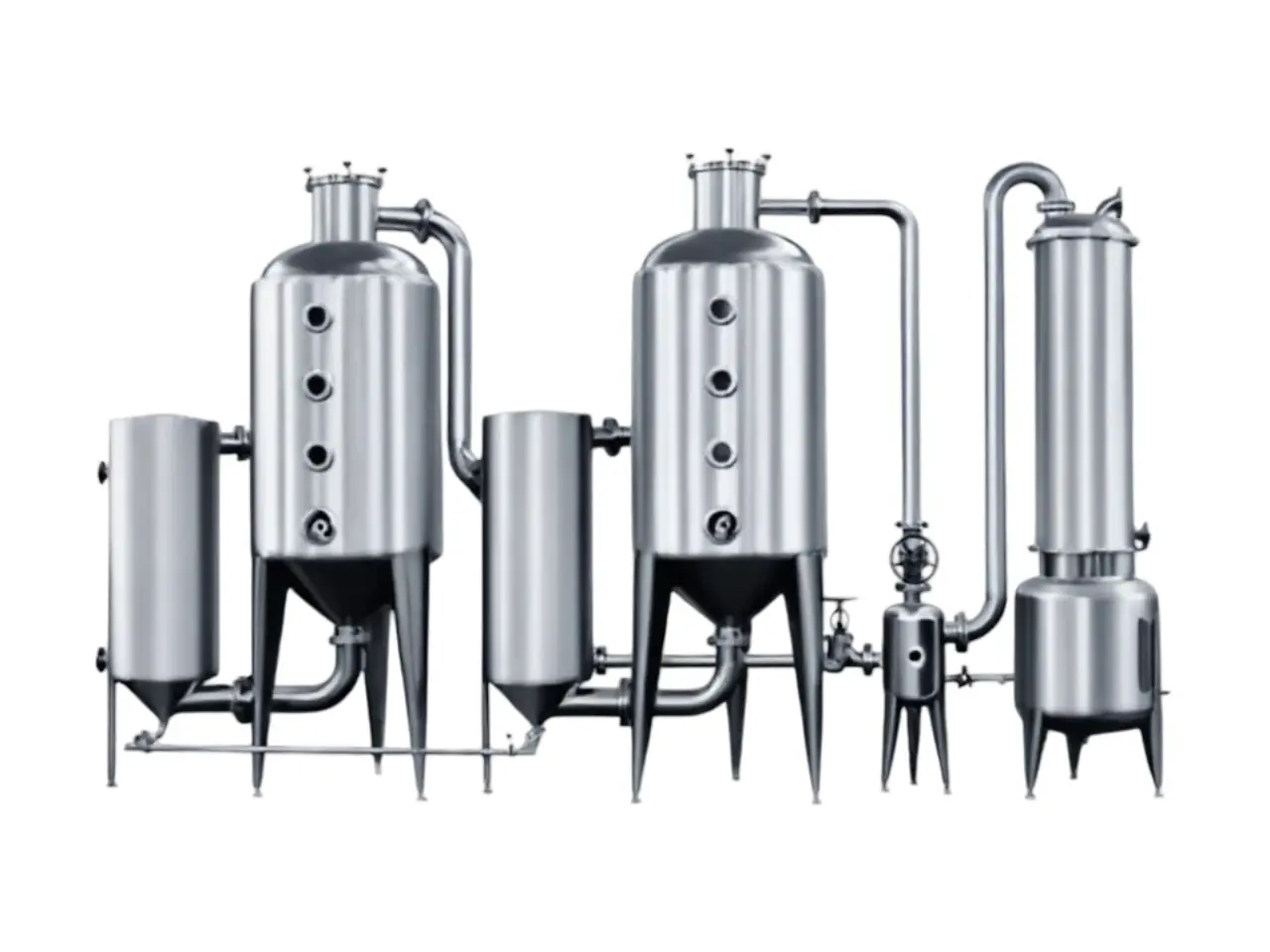
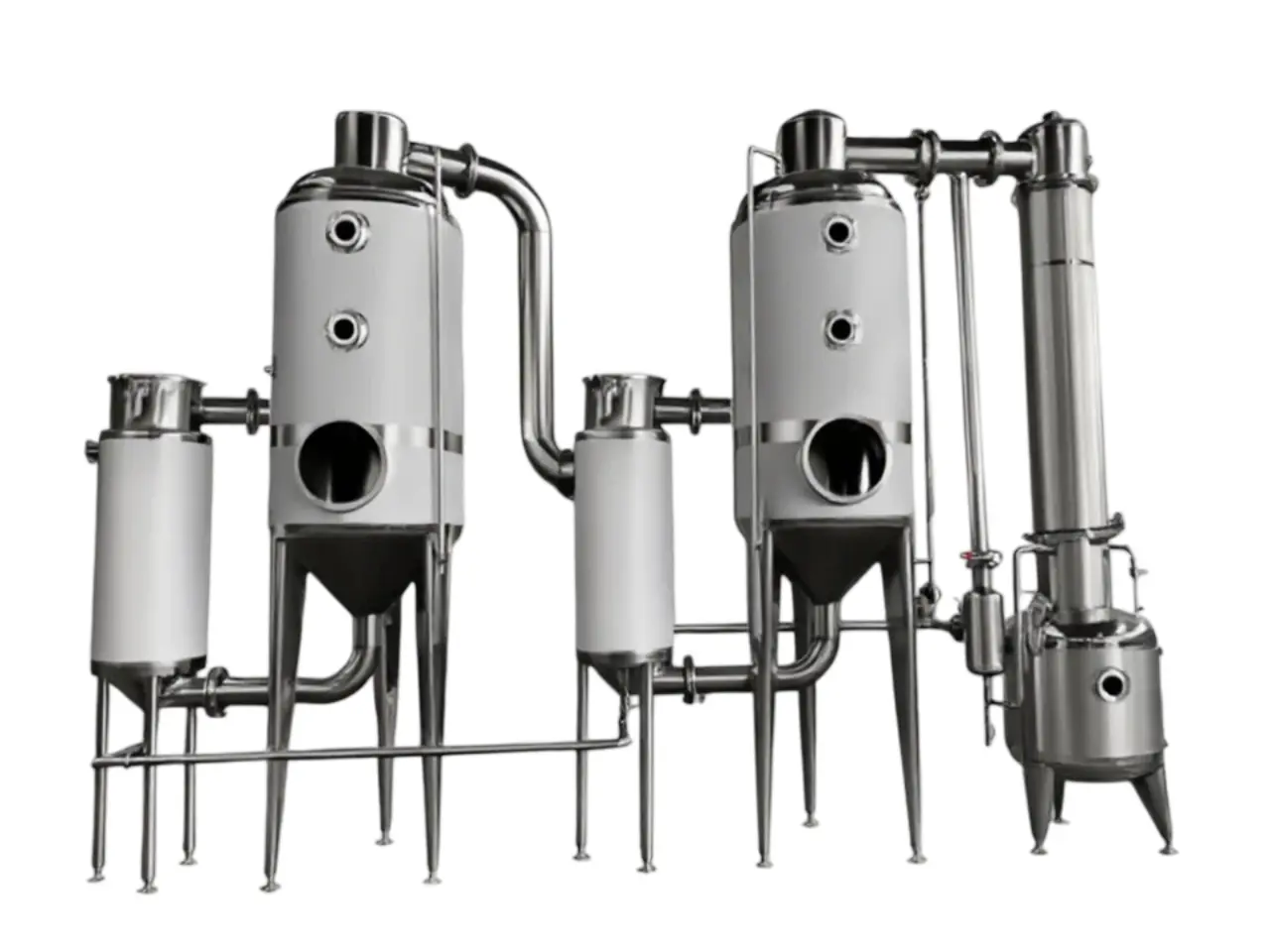
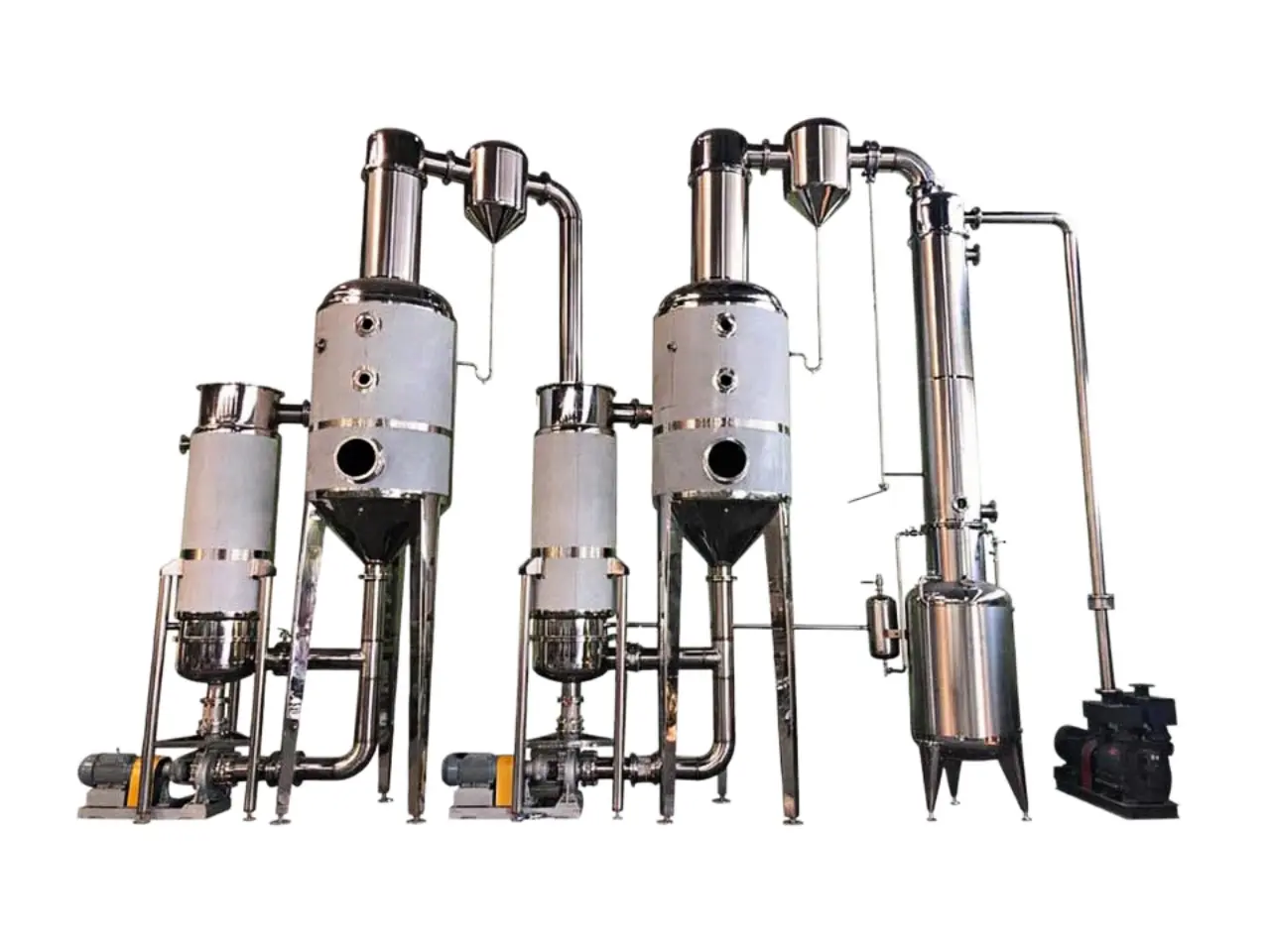
Dual-Stage Energy Saving | 40% Lower Operating Costs | Industrial-Scale High-Density Extraction

40% reduction in energy consumption vs. single-effect units

Integrated ethanol/solvent recovery (up to 80% concentration)

Produces thick herbal extracts (1.2 – 1.35 SG)

Pharmaceutical-Grade CGMP & Mirror-Polished Finish
The SJN Series is a high-efficiency, energy-saving Double-effect Vacuum Evaporator designed for the concentration of herbal extracts and liquid materials. By utilizing a dual-stage simultaneous evaporation process with negative pressure and external heating natural circulation, this unit maximizes thermal efficiency. All contact parts are manufactured from premium stainless steel, with high-performance insulation layers on the heaters and chambers. The surfaces are finished with mirror or matte polishing, fully complying with CGMP pharmaceutical standards.
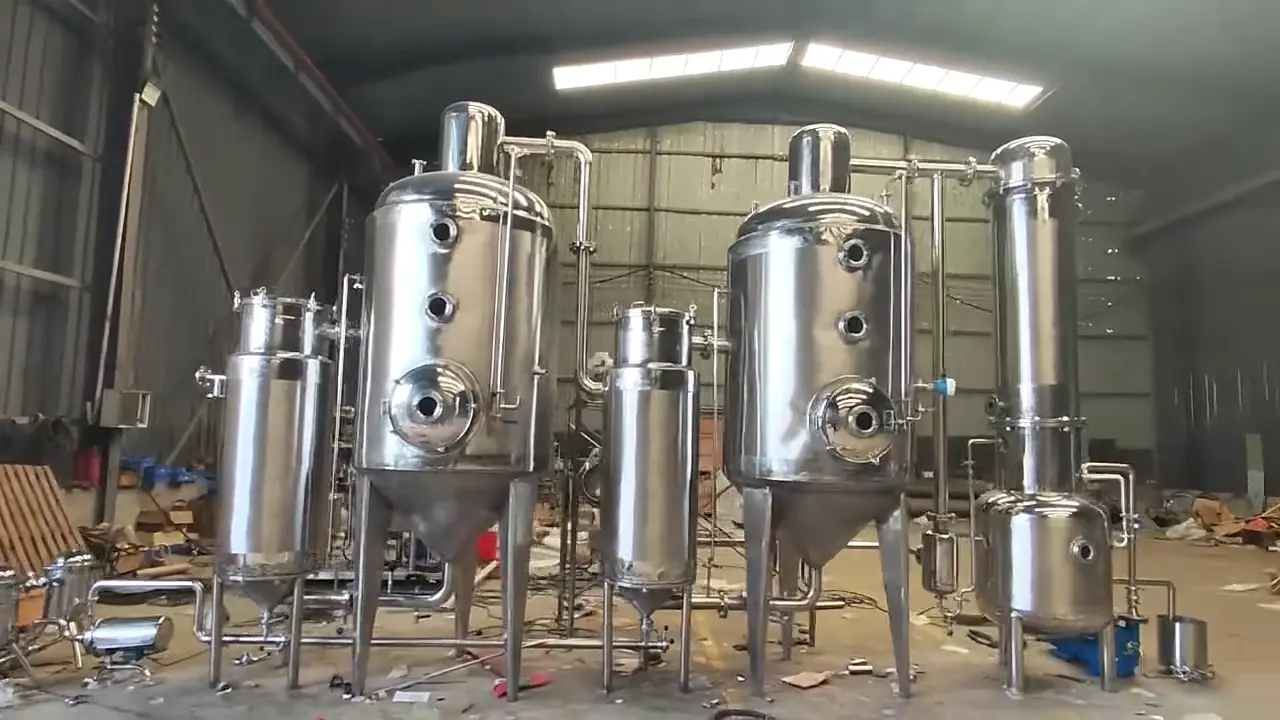
SJN Series Double-Effect External Circulation Vacuum Evaporator
Large-Scale Pharmaceutical Production: The primary choice for concentrating herbal extracts, oral liquids, and antibiotic solutions at low temperatures.
Food & Fermentation Industries: Efficiently dehydrates glucose, starch, MSG, dairy, and natural food additives while preserving flavor profiles.
Chemical Solvent Recycling: Double-Effect Vacuum Evaporator optimized for the high-volume recovery of industrial ethanol and the concentration of heat-sensitive chemical solutions.
Standardized Extraction Workshops: Designed for facilities requiring a stable, high-output production line with minimal manual intervention.
| Model | SJNII500 | SJNII1000 | SJNII1500 | SJNII2000 | SJNII3000 | |
|---|---|---|---|---|---|---|
| Vacuum Chamber Volume (m³) | 1 | 1.5 | 2 | 2.5 | 3 | |
| Receiver Tank Volume (m³) | 0.3 | 0.5 | 0.8 | 1.0 | 1.2 | |
| Recovered Alcohol Concentration (%) | 85 | 85 | 85 | 85 | 85 | |
| Maximum Evaporation Rate (kg/h) | 500 | 1000 | 1500 | 2000 | 3000 | |
| Vapor Pressure (MPa) | 0.03-0.09 | 0.03-0.09 | 0.03-0.09 | 0.03-0.09 | 0.03-0.09 | |
| Steam Consumption (kg/h) | 250 | 500 | 750 | 1000 | 1500 | |
| Water Consumption (t/h) | 5 | 10 | 15 | 15 | 25 | |
| Auxiliary Heater Heating Area (m²) | 8 | 10 | 16 | 22 | 28 | |
| Second Effect Secondary Condensation Area (m²) | 16 | 20 | 26 | 32 | 38 | |
| Steam Port (mm) | 40 | 50 | 50 | 65 | 80 | |
| Cooling Water Port (mm) | 50 | 50 | 65 | 65 | 65 | |
| Overall Dimensions (mm) | 4000x1500x3300 | 5000x1600x3500 | 6000x1600x3700 | 6500x1700x4300 | 7500x2000x4500 | |
| Evaporation Temperature (°C) | I | 80-90 | 80-90 | 80-90 | 80-90 | 80-90 |
| II | 45-70 | 45-70 | 45-70 | 45-70 | 45-70 | |
| Design Pressure (MPa) | 0.09 | 0.09 | 0.09 | 0.09 | 0.09 | |
| Vacuum Level (MPa) | I | 0.04 | 0.04 | 0.04 | 0.04 | 0.04 |
| II | 0.06 | 0.06 | 0.06 | 0.06 | 0.06 | |
| Concentration Ratio | 1.1-1.3 | 1.1-1.3 | 1.1-1.3 | 1.1-1.3 | 1.1-1.3 | |
Answer: The Double-Effect External Circulation Vacuum Evaporator is engineered to maximize thermal efficiency through a dual-stage heat recycling process. In this configuration, the secondary steam generated from the evaporation in the first-effect heater is not wasted; instead, it is directed into the heating chamber of the second-effect heater. Because the second stage operates at a higher vacuum level (and thus a lower boiling point), the waste heat from the first stage is sufficient to drive the evaporation process again. This “Master” level of energy management typically reduces steam consumption by nearly 50% compared to single-effect units, making it an excellent choice for high-capacity industrial lines.
Answer: In our External Circulation Vacuum Evaporator, the liquid material moves through an external heating chamber and then flashes into the evaporation separator at high speed. This separation of heating and evaporation zones ensures that the material spends very little time in the high-temperature region. This rapid, one-way circulation prevents “dead spots” and localized overheating, which is the best way to maintain the biological activity, natural color, and aromatic integrity of pharmaceutical extracts, fruit juices, or dairy products. This elite design prevents thermal degradation and ensures a perfect final concentrate.
Answer: The high-velocity flow within the Double-Effect Vacuum Evaporator creates a natural “scouring” effect inside the tubes of the heat exchanger. Because the material is driven by the density difference and vacuum suction, it maintains a turbulent flow that inhibits the formation of scale or material buildup on the 304SS surfaces. This reliable self-cleaning characteristic allows for longer production runs between maintenance cycles. For laboratories or factories handling thick herbal extracts or chemical solutions, this sturdy construction ensures absolute consistency in heat transfer efficiency throughout the entire batch.
Answer: By maintaining a stable high-vacuum environment, the External Circulation Vacuum Evaporator lowers the boiling point of the liquid to as low as 45°C to 60°C. This low-temperature boiling is perfect for preventing the oxidation and caramelization of sugars and proteins. Furthermore, the increased temperature difference between the heating steam and the low-boiling-point liquid accelerates the evaporation rate, leading to an extraordinary increase in hourly output. Our expert engineering team integrates high-precision vacuum gauges and control valves to ensure that the pressure remains constant, providing a successful and safe environment for sensitive chemical reactions.
Answer: The External Circulation Vacuum Evaporator system is equipped with a high-capacity shell-and-tube condenser that processes vapors from both effects. As the solvent vapor is drawn into the condenser, it comes into contact with a large surface area of cooling tubes, rapidly reverting into a liquid state for collection in the recovery tank. This advanced recovery system typically achieves a solvent return rate of over 95%. This high efficiency not only reduces the cost of raw materials but also ensures that volatile organic compounds are contained, meeting the absolute environmental standards required for modern pharmaceutical and chemical manufacturing.
“Still have questions? Contact our technical team for a free consultation.”
We will contact you within one working day. Please pay attention to your email.
Automatic Vacuum Honey Processing & Filtering Machine
Vacuum Low-Temperature Liquid Extraction & Concentration Unit
Custom Steam Distillation & Heat Reflux Essential Oil Equipment
WhatsApp: +8615736768129
Email: [email protected]
Address: Zhengzhou, Henan Province, China


COPYRIGHT© 2026 Zhengzhou Panchi Machinery Equipment Co., Ltd. | Privacy Policy

Our team will respond within 24 hours.
Thanks! We'll get back to you within 24 hours.
Check your inbox (and spam folder) for our reply.