
Chemical reactors are essential equipment in pharmaceutical, chemical, petrochemical, and specialty material manufacturing. They provide controlled environments for mixing, heating, cooling, and chemical reactions. However, when operating conditions are not properly controlled, reactor feeding mistakes can create serious safety risks, including uncontrolled reactions, excessive pressure buildup, and even explosions.
Among all reactor operation stages, material feeding is one of the most critical points that requires strict management.
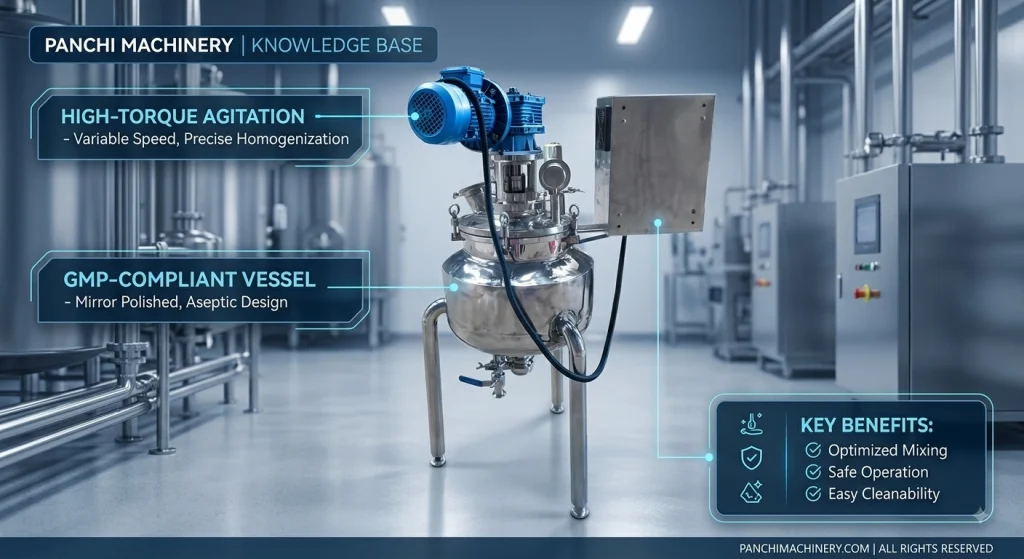
The way reactants are introduced into a reactor directly affects:
For this reason, Chemical Reactor Safety depends not only on reactor design but also on correct feeding procedures and operational discipline.
A well-designed reactor system combined with proper operating procedures can significantly reduce accident risks and improve production reliability.
During chemical reactions, different materials may interact rapidly after entering the reactor. Some reactions release large amounts of heat, generate gases, or cause sudden changes in pressure.
If feeding conditions are not controlled, several dangerous situations may occur:
These risks are especially common in processes involving:
For example, adding a highly reactive reagent too quickly may cause a sudden increase in reaction rate. If the heat removal system cannot respond fast enough, the reaction may enter a runaway condition.
Therefore, industrial manufacturers must treat feeding operations as a key part of their safety management system.
A chemical reactor is not simply a container where materials are mixed together. It is a controlled reaction environment where every parameter must remain within a safe operating range.
Important control factors include:
The addition speed of raw materials affects reaction stability.
An uncontrolled feeding rate may cause:
Controlled feeding allows operators to maintain stable reaction conditions.
The order in which materials are added can directly influence reaction behavior.
Some chemicals must be introduced gradually or in a specific sequence to avoid:
This is why Reagent addition order safety is an important part of industrial chemical production procedures.
During reactor operation, temperature and pressure changes provide important safety information.
Continuous monitoring helps operators identify:
Modern reactor systems often integrate sensors and automated controls to improve process visibility.
Although reactor accidents can have multiple causes, many incidents are related to operational errors rather than equipment failure.
Common problems include:
Adding the wrong material or incorrect quantity can create unexpected reactions.
Rapid addition may exceed the reactor’s heat transfer capacity.
Without clear operating instructions, operators may use inconsistent feeding methods.
Ignoring pressure changes or incorrect vent operation may increase explosion risks.
These issues demonstrate why manufacturers need both reliable equipment and standardized operating procedures.
A complete safety system should include a detailed Safe Reactor Feeding SOP.
A professional feeding procedure typically covers:
A standardized SOP helps operators perform the same steps consistently and reduces human error.
For modern chemical plants, safety management should combine:
This integrated approach creates a safer production environment.
Improving Chemical Reactor Safety requires attention to both equipment engineering and daily operation.
Manufacturers should evaluate:
A properly designed reactor with suitable safety features provides better control over complex chemical reactions.
In the following sections, we will analyze four common feeding mistakes that may cause reactor explosions and explain practical Reactor Explosion Prevention methods that manufacturers can apply in industrial production.
Material feeding is one of the most sensitive operations in chemical production. Even when a reactor is designed according to industrial standards, incorrect feeding practices can create unstable reaction conditions.
Common problems such as excessive feeding speed, incorrect reagent sequence, insufficient monitoring, and improper pressure management may lead to:
Understanding these mistakes helps manufacturers improve Chemical Reactor Safety and establish more reliable operating procedures.
One of the most common reactor safety risks is uncontrolled feeding speed.
When reactive materials are added too quickly, the reaction rate may increase faster than the reactor’s heat removal capability. This can cause:
This problem is especially serious in exothermic reactions where large amounts of heat are released within a short period.
A proper Safe Reactor Feeding SOP should define:
Operators should adjust feeding speed according to real-time reaction conditions instead of following fixed timing without monitoring.
For industrial production, automated feeding systems can further improve safety by controlling material addition accurately and reducing human operation errors.
Chemical reactions often require a specific sequence for adding different materials. Changing the order may significantly affect reaction behavior.
Incorrect addition order may result in:
For example, adding a highly reactive reagent into a concentrated solution too quickly may create unstable local reaction zones.
Therefore, Reagent addition order safety should be clearly defined during process development.
A complete procedure should include:
Operators should follow validated production instructions instead of changing the feeding sequence based on experience.
For chemical plants handling complex reactions, a detailed feeding procedure is an important part of Reactor Explosion Prevention.
A reactor requires continuous monitoring during material addition because feeding can directly change reaction conditions.
Without proper monitoring, operators may fail to detect:
Temperature and pressure are two critical indicators of reactor stability.
A reliable reactor system should include:
Automation allows operators to identify abnormal conditions earlier and take corrective actions before problems become severe.
In modern chemical production, process monitoring is not only a quality control requirement but also an essential safety measure.
Pressure management is another key factor in preventing reactor accidents.
During chemical reactions, gases or vapors may be generated. If pressure cannot be released properly, internal pressure may exceed equipment limits.
Common causes include:
Following correct Reactor vent valve operation rules helps maintain safe pressure conditions during operation.
Operators should understand:
A properly designed reactor should also include suitable pressure protection components, such as:
These features work together to reduce explosion risks and improve overall operational safety.
Most reactor feeding incidents are not caused by a single failure. They usually result from a combination of:
A strong safety strategy combines:
By identifying these four common feeding mistakes, manufacturers can create more effective Reactor Explosion Prevention strategies and improve production reliability.
Preventing reactor accidents requires more than improving operator procedures. While safe feeding practices are essential, equipment design, material selection, pressure control, and automation systems also play important roles in improving industrial safety.
A reliable reactor system should be designed to maintain stable operating conditions under different production scenarios, including temperature changes, pressure fluctuations, and chemical reaction variations.
Effective Reactor Explosion Prevention combines engineering design with standardized operation to reduce risks throughout the entire production cycle.
The reactor structure directly affects operational safety and long-term reliability.
A properly designed reactor should consider:
Material selection is especially important because unsuitable materials may lead to:
For many industrial applications, stainless steel reactors are preferred because they provide good mechanical strength and corrosion resistance.
A high-quality stainless steel reactor can support safer operation through:
In pharmaceutical, chemical, and specialty material production, selecting the right reactor material is a fundamental step in improving Chemical Reactor Safety.
Pressure management is one of the most important aspects of reactor safety.
During chemical reactions, pressure may increase due to:
A safe reactor system should include appropriate pressure protection components, such as:
These components help operators identify abnormal conditions and prevent pressure from exceeding equipment limits.
In addition, operators must follow correct Reactor vent valve operation rules to ensure pressure can be safely controlled when required.
Proper vent management includes:
A combination of reliable equipment design and correct operation procedures reduces the possibility of pressure-related incidents.
Modern chemical production increasingly relies on automation to improve both safety and efficiency.
Manual operation alone may not provide sufficient response speed when reaction conditions change rapidly.
An automated reactor system can monitor:
Advanced control systems may include:
These technologies help operators detect abnormal conditions earlier and take corrective action before a dangerous situation develops.
Automation also supports consistent production by reducing variations caused by manual operation.
For manufacturers handling complex chemical reactions, automated monitoring is an important part of a complete safety strategy.
Even with advanced reactor equipment, improper operation can still create safety risks.
A complete safety management system should include detailed operating procedures covering:
A well-designed Safe Reactor Feeding SOP helps operators follow consistent steps during every production batch.
Training should also ensure operators understand:
Regular training and procedure updates help reduce human errors and improve overall production safety.
Industrial reactor safety depends on the combination of:
Manufacturers should evaluate the entire production system instead of focusing on only one safety component.
By integrating engineering solutions with proper operating practices, companies can achieve more reliable Reactor Explosion Prevention and create safer chemical production environments.
The next section will introduce how PCM supports customers with customized reactor solutions designed for stable and safe industrial processing.
Improving Chemical Reactor Safety requires a complete approach that combines reliable equipment design, process control, and safe operating procedures.
For chemical, pharmaceutical, and specialty material manufacturers, a reactor is not only a processing vessel but also a controlled reaction platform where temperature, pressure, mixing, and feeding conditions must remain stable.
PCM provides customized reactor solutions designed to help manufacturers improve production reliability while reducing operational risks.
By combining engineering experience with advanced manufacturing capabilities, PCM supports customers in developing safer and more efficient chemical processing systems.
Different chemical processes have different safety requirements. Reactor configuration should be designed according to:
PCM manufactures customized reactor systems for applications requiring:
A properly designed Chemical Reactor can help improve process stability through:
A safe reactor system requires careful attention to every engineering detail.
PCM reactor solutions can include:
High-quality stainless steel provides:
The selected material should match the chemical properties of the processed materials to reduce leakage and contamination risks.
Accurate temperature control is essential for preventing unstable reactions.
Reactor systems can be equipped with:
These features help maintain the required reaction conditions.
Uniform mixing helps prevent:
Proper agitator design improves reaction consistency and operational safety.
A complete reactor safety strategy requires coordination between equipment and operation procedures.
PCM focuses on providing systems that support:
For example, combining a reactor with:
creates a more reliable production environment.
This integrated approach supports effective Reactor Explosion Prevention and helps manufacturers reduce risks caused by process instability.
A: Chemical reactor explosions are often caused by uncontrolled reactions, incorrect feeding procedures, excessive pressure buildup, poor temperature control, or improper operation. Preventing these risks requires both reliable reactor design and standardized safety procedures.
A: A Safe Reactor Feeding SOP should define material verification, feeding sequence, addition speed, temperature monitoring, pressure limits, and emergency procedures. Clear instructions help operators maintain stable reaction conditions and reduce human errors.
A: Reagent addition order safety is important because different materials may react differently depending on concentration, temperature, and mixing conditions. Incorrect sequencing can cause rapid heat release, pressure increases, or unexpected reactions.
A: Manufacturers can improve safety through proper reactor selection, suitable materials, automated monitoring, pressure protection systems, and operator training. Working with an experienced supplier helps create a reactor system designed for specific production requirements.
Choosing the right reactor system is a critical step in improving industrial process safety.
From stainless steel construction to customized temperature, pressure, and mixing solutions, PCM helps manufacturers build reliable reactor systems for demanding chemical applications.
By combining engineering design with safe operating practices, companies can achieve better production stability, reduce operational risks, and create a safer manufacturing environment.


Whatsapp: +8615736768129
Email: [email protected]
Address: Zhengzhou, Henan Province, China
Automatic Vacuum Honey Processing & Filtering Machine
Vacuum Low-Temperature Liquid Extraction & Concentration Unit
Custom Steam Distillation & Heat Reflux Essential Oil Equipment
SS304/316L Low-Temperature Vacuum Scraper Concentrator
QN Spherical Vacuum Concentrator & Alcohol Recovery Unit
Multi-function Stainless Steel Vacuum Distillation & Extraction Unit
Hot Reflux Vacuum Liquid Extraction & Concentration Unit
Single-Effect External Circulation Vacuum Concentrator
SJN Series Double-Effect External Circulation Vacuum Evaporator
We will contact you within one working day. Please pay attention to your email.
Automatic Vacuum Honey Processing & Filtering Machine
Vacuum Low-Temperature Liquid Extraction & Concentration Unit
Custom Steam Distillation & Heat Reflux Essential Oil Equipment
WhatsApp: +8615736768129
Email: [email protected]
Address: Zhengzhou, Henan Province, China


COPYRIGHT© 2026 Zhengzhou Panchi Machinery Equipment Co., Ltd. | Privacy Policy

Our team will respond within 24 hours.
Thanks! We'll get back to you within 24 hours.
Check your inbox (and spam folder) for our reply.