
The global demand for natural ingredients continues to grow across pharmaceutical, nutraceutical, cosmetic, and functional food industries. Manufacturers are under increasing pressure to produce higher-quality botanical extracts while improving extraction efficiency, reducing operating costs, and meeting stricter hygiene and regulatory requirements.
However, producing consistent plant extracts at an industrial scale is not simply a matter of increasing raw material volume. The extraction process must carefully control multiple factors, including solvent selection, temperature, extraction time, filtration efficiency, and final concentration.
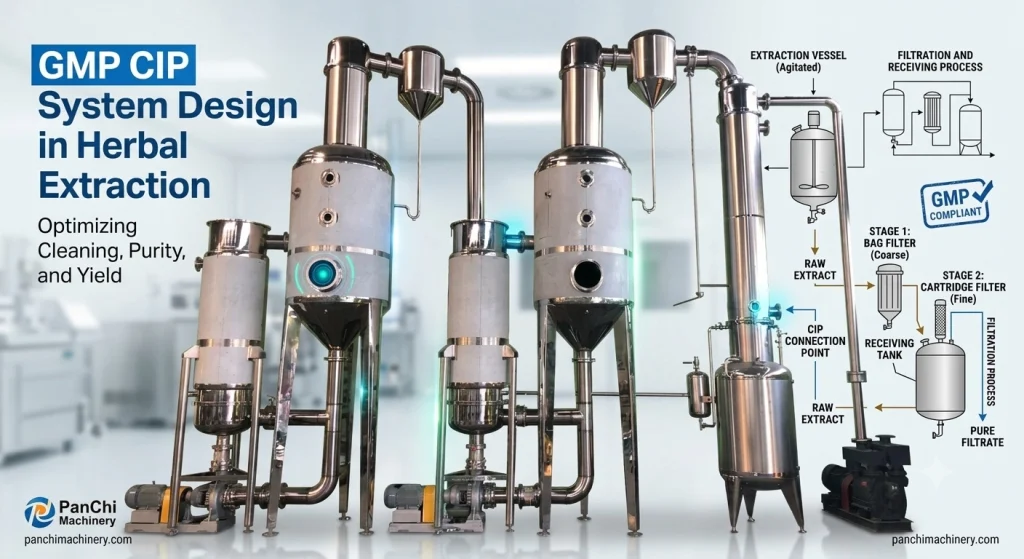
This is why selecting the right plant extraction equipment has become a critical decision for manufacturers planning new production facilities or upgrading existing extraction lines.
Poor equipment selection can create several production challenges:
For industrial manufacturers, extraction equipment is not just a processing vessel. It is the foundation of the entire botanical production workflow.
A properly designed extraction system helps manufacturers maximize valuable compounds from plant materials while maintaining stable, repeatable, and cost-effective production.
Plant extraction equipment refers to industrial processing systems designed to extract valuable compounds from botanical materials using different extraction technologies.
Depending on the raw materials and target compounds, extraction systems may use:
A complete industrial extraction line usually includes several integrated units:
Unlike small laboratory extraction devices, industrial systems are designed for continuous operation, higher production capacity, and strict quality control.
For manufacturers producing herbal medicines, botanical ingredients, or natural active compounds, choosing suitable plant extraction equipment directly affects production efficiency and product quality.
Different plant materials have different chemical characteristics.
For example:
Using unsuitable equipment can reduce extraction performance or damage valuable ingredients.
A professional extraction solution considers:
This customized approach ensures that the equipment matches the actual production process rather than forcing materials to adapt to unsuitable machinery.
Equipment selection should always begin with understanding the complete extraction workflow.
A typical industrial botanical extraction process includes:
Raw material preparation
↓
Extraction
↓
Solid-liquid separation
↓
Filtration
↓
Concentration
↓
Purification
↓
Drying or packaging
Understanding the complete Herbal Extraction Process Step by Step helps manufacturers identify where equipment performance affects the final product.
For example, inefficient extraction vessels may reduce compound recovery, while poor filtration design can increase processing time and maintenance requirements.
Modern plant extraction equipment is widely used in industries requiring natural and high-value ingredients.
Pharmaceutical manufacturers use extraction systems to produce:
These applications require strict control over temperature, cleanliness, and batch consistency.
The nutraceutical market requires standardized botanical ingredients for:
Reliable extraction equipment helps maintain consistent active ingredient levels between production batches.
Plant extracts are increasingly used in:
Manufacturers require gentle extraction methods to preserve natural compounds and aromas.
Extraction systems are also applied for:
In these applications, production efficiency and sanitary design are equally important.
Modern manufacturers are moving away from individual machines and toward complete processing systems.
A complete industrial extraction system combines extraction, filtration, concentration, and recovery technologies into one coordinated production line.
This integrated approach provides:
For companies investing in new botanical production facilities, selecting the right plant extraction equipment is the first step toward building an efficient and scalable manufacturing operation.
Selecting suitable plant extraction equipment starts with understanding the different extraction technologies available for industrial manufacturing. Different botanical materials contain different active compounds, and each extraction method has unique advantages depending on the target ingredients, production scale, and quality requirements.
For example, aromatic plants containing volatile oils require different processing technology compared with medicinal roots containing polysaccharides or flavonoids. Therefore, manufacturers should select equipment based on the complete botanical extraction process, rather than choosing a machine only according to capacity.
Modern industrial extraction systems typically combine extraction vessels, heating systems, filtration units, concentration equipment, and automation controls to create a complete production workflow.
Solvent extraction is one of the most widely used methods in industrial botanical processing.
This technology uses suitable solvents to dissolve valuable compounds from plant materials. Common solvents include:
An industrial solvent extraction system usually includes:
During operation, plant materials are loaded into the extraction vessel, and the selected solvent penetrates the plant structure to dissolve target compounds.
This method is widely applied for producing:
Advantages of solvent extraction include:
For manufacturers producing high-value botanical ingredients, properly designed plant extraction equipment can significantly improve active compound recovery while reducing solvent waste.
Steam distillation is commonly used for extracting volatile aromatic compounds from plants.
Typical raw materials include:
During steam distillation, steam passes through plant materials and carries volatile components into a condenser system. The vapor is then cooled and separated into essential oil and water phases.
A complete steam distillation system usually contains:
This extraction method is especially suitable for:
The main advantages include:
For manufacturers producing essential oils, the design of the distillation chamber, steam distribution, and condensation efficiency directly affects oil yield and quality.
Some botanical compounds are sensitive to high temperatures and may degrade during conventional extraction.
In these applications, vacuum technology provides an effective solution.
A vacuum-assisted plant extraction equipment system reduces internal pressure, allowing processing to occur at lower temperatures.
Benefits include:
Vacuum extraction is commonly used for:
By combining vacuum control with precise heating and mixing, manufacturers can achieve more stable extraction conditions.
This technology is particularly valuable when processing materials containing:
For advanced production facilities, vacuum extraction can be integrated with concentration and solvent recovery systems to create a complete automated workflow.
Many industrial manufacturers process multiple botanical materials rather than producing only one extract.
In these cases, a multi-functional extraction system provides greater production flexibility.
A customized system may combine:
Compared with single-purpose equipment, multifunctional systems allow manufacturers to handle different extraction requirements within one production platform.
Applications include:
Modern factories increasingly require complete solutions rather than independent machines.
An industrial extraction system integrates multiple processing stages into one coordinated workflow:
Raw material preparation
↓
Extraction
↓
Filtration
↓
Concentration
↓
Solvent recovery
↓
Storage or drying
This integrated design improves:
A complete system can also include:
These features are particularly important for pharmaceutical and food-grade production where hygiene and repeatability are essential.
Choosing the right plant extraction equipment requires evaluating several factors:
Different plants require different extraction methods based on:
Equipment size should match production goals:
Oversized equipment may increase investment costs, while undersized systems may limit future growth.
Industries such as pharmaceuticals require:
Manufacturers should consider whether the system can support:
A properly selected extraction system provides flexibility for future business growth.
Choosing the correct type of plant extraction equipment is the foundation for building an efficient botanical production line. Whether manufacturers require solvent extraction, steam distillation, vacuum-assisted processing, or a complete multifunctional system, the equipment design should always match the specific production objectives.
A major inefficiency cited in professional processing forums is the “multi-tank struggle”—moving honey from a liquefier to a filter, and then to a dryer. The Panchi FM-Series integrates these into a singular 304-stainless steel footprint:
| Model | Capacity (8H) | Target Market |
| FM-400 | 0.5 Tons | Small-scale boutique apiaries focusing on high-margin “Raw” retail. |
| FM-550 | 1.0 Ton | Mid-sized cooperatives in high-humidity tropical zones. |
| FM-600 | 2.0 Tons | Large-scale exporters requiring standardized B2B bulk processing. |
Choosing the right plant extraction equipment requires more than selecting a machine with the required capacity. Industrial extraction production involves multiple variables, including raw material characteristics, extraction methods, hygiene standards, automation requirements, and future expansion plans.
A poorly configured extraction system may lead to:
For manufacturers investing in pharmaceutical, nutraceutical, or botanical production facilities, equipment selection should focus on long-term production performance rather than initial purchase cost.
The following seven factors are essential when evaluating industrial extraction solutions.
The first step in selecting plant extraction equipment is determining whether the system matches the intended extraction technology.
Different extraction methods require different equipment configurations.
For example:
Requires:
Requires:
Requires:
The selected equipment should support the complete botanical extraction process, including extraction, separation, concentration, and recovery.
Manufacturers should avoid choosing equipment based only on vessel volume because two systems with the same capacity may have completely different performance depending on their internal design.
Production capacity is one of the most important factors when selecting an industrial extraction system.
Manufacturers should evaluate:
Typical production stages include:
Used for:
Used for:
Used for:
Selecting the correct capacity prevents two common problems:
A professional supplier should help customers select equipment based on actual production targets rather than simply recommending the largest available model.
Material selection directly affects product safety, equipment lifespan, and cleaning performance.
For pharmaceutical and food-related extraction applications, stainless steel is commonly required.
Typical materials include:
SUS316L is often preferred for high-purity applications because of its stronger corrosion resistance.
A high-quality plant extraction equipment system should include:
These design features help:
For industries producing pharmaceutical extracts or nutraceutical ingredients, sanitary design is not an optional feature but a fundamental requirement.
Modern extraction production increasingly depends on automation.
A reliable extraction system should provide accurate control over:
Advanced systems may include:
Automation improves:
For large-scale factories, automated control also reduces dependence on manual operation and helps standardize production procedures.
A complete industrial extraction system should be designed as an integrated production platform rather than a collection of independent machines.
Energy consumption directly affects long-term production profitability.
When evaluating plant extraction equipment, manufacturers should consider:
Advanced extraction systems improve energy utilization through:
For example, vacuum-assisted extraction can reduce processing temperature requirements, protecting heat-sensitive compounds while lowering energy consumption.
Although energy-saving designs may increase initial investment, they often provide significant savings throughout the equipment lifecycle.
Industrial extraction equipment operates under demanding production conditions.
Frequent cleaning and maintenance are essential for:
Manufacturers should evaluate:
Modern herbal extraction equipment often integrates CIP systems that allow automated cleaning without extensive manual disassembly.
Benefits include:
Production flexibility is also important for companies processing multiple botanical materials.
A flexible system should allow adjustments in:
This enables manufacturers to develop new products without replacing the entire production line.
The final factor is selecting the right equipment manufacturer.
Industrial extraction projects often require customization based on:
A professional supplier should provide:
For complex botanical production facilities, purchasing a standard machine may not deliver the expected results.
Instead, manufacturers need a complete engineering partner who understands the entire production workflow.
A customized herbal extraction equipment solution can integrate:
This integrated approach helps manufacturers achieve higher efficiency and more stable production performance.
Selecting plant extraction equipment is a strategic investment that affects product quality, operating costs, and production scalability.
The best solution should balance:
By evaluating these seven factors, manufacturers can avoid costly equipment mistakes and build an extraction system capable of supporting long-term industrial growth.
Selecting the right plant extraction equipment supplier is as important as choosing the extraction technology itself. Industrial botanical production requires more than a single extraction vessel. Manufacturers need a complete processing solution that can deliver stable performance, meet sanitary standards, and adapt to future production requirements.
PCM provides customized extraction solutions designed for pharmaceutical, nutraceutical, herbal, cosmetic, and food processing industries.
Instead of offering a standard machine configuration, PCM evaluates each project according to:
This engineering-based approach ensures that every extraction system is optimized for the customer’s actual production needs.
PCM designs and manufactures complete herbal extraction equipment solutions for different industrial applications.
A complete extraction system can include:
By integrating multiple processing stages into one production line, manufacturers can achieve:
For companies expanding from laboratory testing to commercial production, PCM can provide scalable solutions that support different production stages.
For pharmaceutical and high-value botanical production, equipment hygiene is a critical requirement.
PCM extraction systems are designed with:
These features help manufacturers reduce contamination risks and maintain stable product quality during repeated production cycles.
Different botanical materials require different processing approaches.
PCM systems can be configured for:
Suitable for:
Suitable for:
Suitable for:
This flexibility allows manufacturers to select a system based on their specific botanical extraction process rather than adapting their production to unsuitable equipment.
Modern manufacturers increasingly prefer complete solutions instead of isolated machines.
A PCM industrial extraction system can integrate with:
Raw Material Preparation
↓
Extraction
↓
Filtration
↓
Vacuum Concentration
↓
Solvent Recovery
↓
Storage
↓
Packaging
This integrated approach improves process control and reduces material transfer between different production stages.
It also allows manufacturers to upgrade individual sections of the production line as business requirements change.
A successful extraction project requires technical support beyond equipment manufacturing.
PCM provides assistance including:
For customers investing in large-scale botanical production, PCM focuses on creating reliable solutions that balance:
Choosing professional plant extraction equipment is not only about purchasing machinery. It is about building a stable production foundation that supports future business growth.
A: Industrial plant extraction usually requires extraction vessels, filtration systems, concentration equipment, solvent recovery units, storage tanks, and cleaning systems. The exact configuration depends on the raw material, extraction method, and production capacity.
A: Manufacturers should evaluate raw materials, extraction technology, production volume, temperature requirements, automation level, and GMP standards. A customized equipment design usually provides better long-term performance than a standard machine.
A: Herbal extraction equipment is designed for industrial production with higher requirements for efficiency, sanitation, automation, and scalability. Standard extraction machines are usually limited in capacity and process flexibility.
The right plant extraction equipment can improve extraction efficiency, protect valuable botanical compounds, and create a more reliable production workflow.
From individual extraction vessels to complete automated processing lines, PCM provides customized engineering solutions for manufacturers worldwide.
Whether you are building a new botanical production facility or upgrading an existing extraction line, PCM can help design an efficient system that matches your production goals.
Contact PCM to discuss your extraction requirements and develop a customized solution for your industrial production needs.


Whatsapp: +8615736768129
Email: [email protected]
Address: Zhengzhou, Henan Province, China
Automatic Vacuum Honey Processing & Filtering Machine
Vacuum Low-Temperature Liquid Extraction & Concentration Unit
Custom Steam Distillation & Heat Reflux Essential Oil Equipment
SS304/316L Low-Temperature Vacuum Scraper Concentrator
QN Spherical Vacuum Concentrator & Alcohol Recovery Unit
Multi-function Stainless Steel Vacuum Distillation & Extraction Unit
Hot Reflux Vacuum Liquid Extraction & Concentration Unit
Single-Effect External Circulation Vacuum Concentrator
SJN Series Double-Effect External Circulation Vacuum Evaporator
We will contact you within one working day. Please pay attention to your email.
Automatic Vacuum Honey Processing & Filtering Machine
Vacuum Low-Temperature Liquid Extraction & Concentration Unit
Custom Steam Distillation & Heat Reflux Essential Oil Equipment
WhatsApp: +8615736768129
Email: [email protected]
Address: Zhengzhou, Henan Province, China


COPYRIGHT© 2026 Zhengzhou Panchi Machinery Equipment Co., Ltd. | Privacy Policy

Our team will respond within 24 hours.
Thanks! We'll get back to you within 24 hours.
Check your inbox (and spam folder) for our reply.